
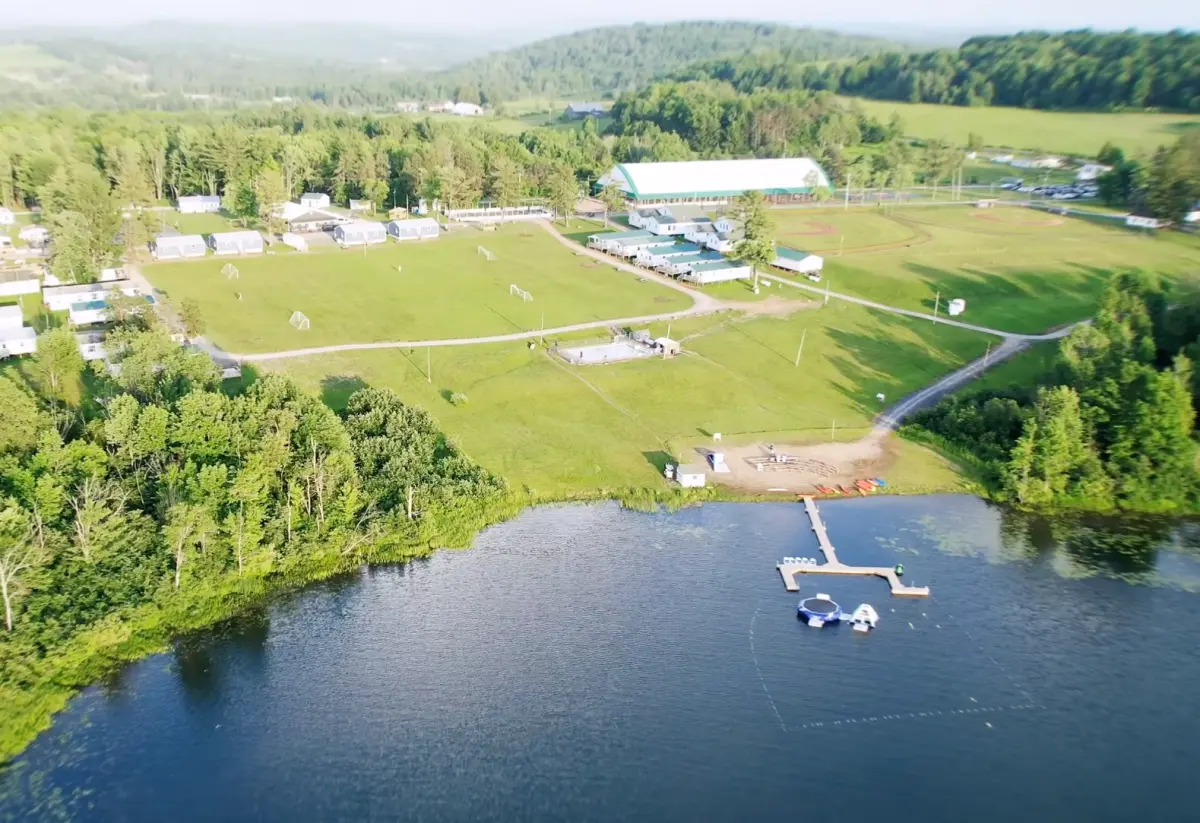
The rapid rise—and equally dramatic decline—of one of the largest privately owned summer camp businesses in the United States has sent shockwaves through both the camping industry and the Israeli bond market, while leaving thousands of parents uncertain about the future of their children's summer programmes.
Brothers Michael and David Shabsels, long regarded as leading figures in New York's Jewish summer camp sector, spent decades building an extensive portfolio of camps, real estate and commercial assets. Their business interests eventually encompassed around thirty summer camps across New York, Pennsylvania and New Jersey, together with office properties, retail developments and recreational facilities.
Today, however, that empire is being dismantled through bankruptcy proceedings.
According to court filings and reports by The Jerusalem Post, Globes, The Real Deal, Law360, The Hollywood Reporter and other publications, companies connected to the brothers sought Chapter 11 bankruptcy protection after defaulting on significant financial obligations. Israeli bondholders are reported to be owed approximately $214 million, while total liabilities connected with their wider property interests have been estimated by some reports at between $500 million and $1 billion.
The financial difficulties are said to have emerged after years of aggressive expansion funded by substantial borrowing.
Individuals familiar with the business told multiple media outlets that the brothers played different roles within the organisation. Michael was generally viewed as the financial strategist, while David managed many of the day-to-day camp operations and maintained relationships throughout the camping community.
One long-time business associate described David as "fair" and "honest," but questioned whether he could truly have been unaware of the scale of the financial problems developing within the organisation after nearly three decades of working alongside his brother.
The same source suggested David believed Michael had become consumed with attempting to rescue the business, continually taking greater financial risks in an effort to keep the enterprise afloat.
Reports indicate that the business suffered significant pressure following the COVID-19 pandemic, when commercial tenants occupying office buildings owned by affiliated companies allegedly fell behind on rent, reducing available cash flow.
As liquidity tightened, the companies reportedly turned increasingly to short-term financing, including Merchant Cash Advance loans—high-interest borrowing often used when conventional lending is unavailable. According to Globes, defaults on these facilities eventually accounted for approximately $200 million of outstanding obligations.
Court filings cited by The Jerusalem Post also allege that approximately $32 million was transferred from company accounts into a personal account, leaving insufficient funds to meet obligations to bondholders. Those allegations form part of the ongoing legal proceedings and have yet to be fully tested in court.
The companies are also reported to be the subject of a United States Department of Justice investigation, according to disclosures referenced in filings reported by The Real Deal. No findings have been announced, and the investigation remains ongoing.
Meanwhile, the most immediate concern has become the operation of the camps themselves.
Because the bankruptcy proceedings commenced in the middle of the summer season, parents whose children were already attending camp suddenly faced uncertainty over whether programmes would continue uninterrupted.
More than 120 parents reportedly wrote to the bankruptcy court asking that camp operations be preserved so that children could complete their summer. As one parent told Law360:
"I'm dealing with two little broken hearts if this doesn't happen the way I hope it ends up."
Industry observers have described the timing of the asset sales as particularly unfortunate, noting that a mid-season restructuring risks disrupting families who have planned their children's summers months in advance.
Among the best-known properties included in the sale process are Camp Mohawk, Camp Lokanda, Camp Achim, Camp Chen-A-Wanda, Camp Malka, Camp Lavi and Camp Mesorah.
One notable bidder is Warner Bros. Discovery Chief Executive David Zaslav, whose family has longstanding connections to Camp Mohawk. According to The Hollywood Reporter, an investment company associated with Zaslav submitted an offer reportedly worth $68 million for Camp Mohawk and its affiliated preschool, viewing the acquisition as a long-term investment.
The Shabsels brothers themselves built their fortune after earlier success in collegiate sports publishing. In 2009 they reportedly sold their interests in University Sports Publications for approximately $37.5 million, capital that helped finance their subsequent expansion into camps and commercial real estate through Simad Holdings and related companies.
For many within Brooklyn's Jewish community, where the brothers built their reputation over several decades, the collapse has come as a profound surprise.
Whatever the eventual outcome of the bankruptcy proceedings, one reality is already clear: beyond the hundreds of millions of dollars in disputed debts and financial claims are thousands of children, parents, employees and seasonal staff whose summers—and in many cases livelihoods—have been caught in the consequences of a business empire that expanded faster than its finances could ultimately sustain.