
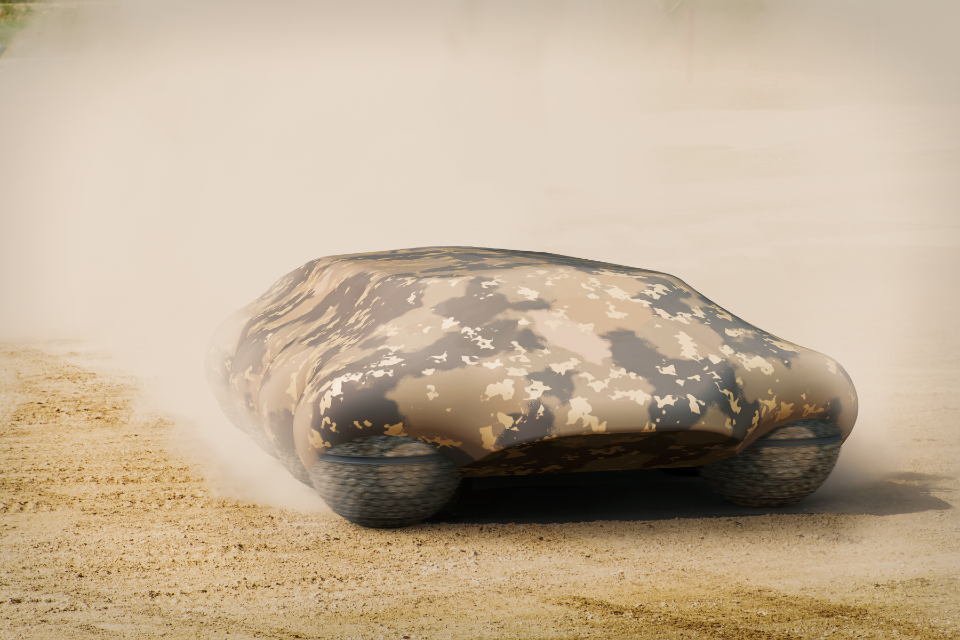
The study explores solutions to protect Uncrewed Ground Vehicles (UGVs) and ensure high levels of mobility, survivability and mission availability
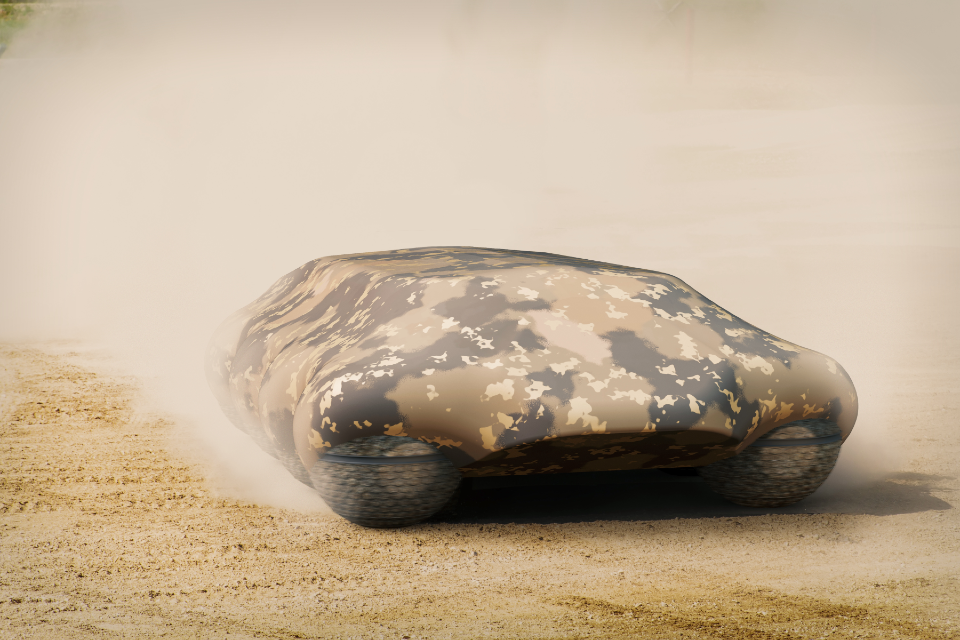
The Defence Science and Technology Laboratory (Dstl) has initiated a study into future Uncrewed Ground Vehicle (UGV) concepts to explore cost-effective solutions to protect UGVs from threat and provide specific armour and technology that will ensure high levels of mobility, survivability and mission availability to support crewed platforms in battlefield warfare.
The work has been carried out in conjunction with a consortium led by RBSL with Prodrive, ARKE, ThinkCreative, Cranfield University and BAE Systems as key partners, and was announced at the 2021 Defence and Security Equipment International (DSEI) trade exhibition.
The concept study has focused on 2 timescales: the near term which addresses solutions that could be realised using currently available or mature technologies, and the longer term looking at technologies that are likely to be available 10 years or further ahead.
The focus has been on medium weight platforms, around 2 to 5 tonnes, which have been the subject of a lot of interest due to the useful payloads they can carry.
Dstl’s Matt Ackroyd is the project lead and said:
A key challenge of the study has been improving the mobility and survivability of platforms without compromising payload. Further challenges arise from the desire to provide an amphibious capability for river crossing and littoral operations.
In order to meet the demanding, and conflicting requirements, novel modular concepts have been developed which would allow platforms to be configured in theatre to meet specific mission requirements. In order to meet the mobility requirements and enable the smaller UGV platforms to keep station with larger crewed platforms, novel wheel and tracked suspension systems have been designed and modelled.
Dan continued:
The concepts are now being benchmarked against the performance of best in class current UGVs and their operational use explored in synthetic environment based experimentation.