
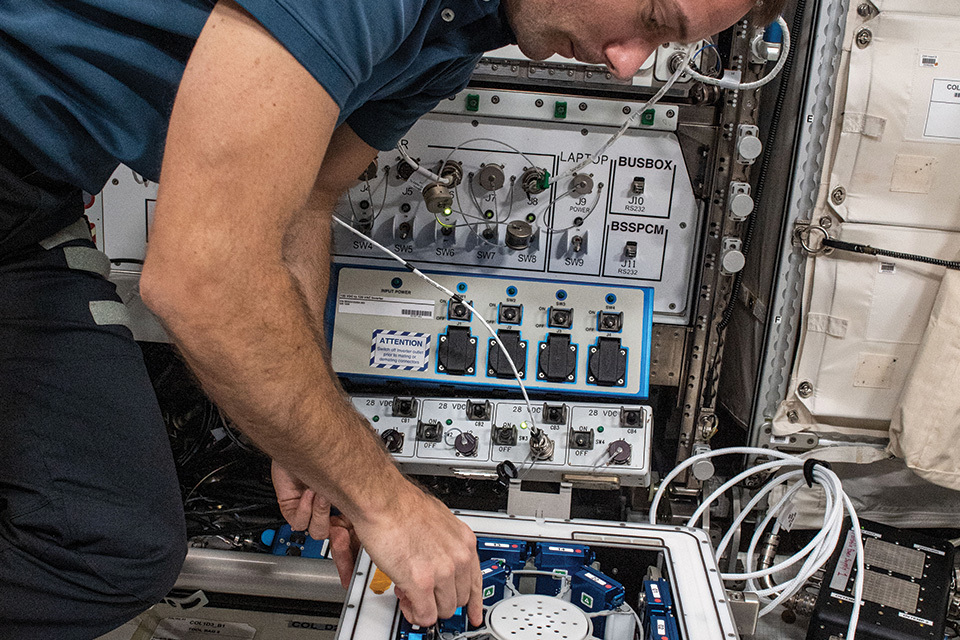
Scientists will use the International Space Station to carry out experiments seeking to improve understanding of currently incurable child brain tumours and the muscle ageing process, thanks to UK Taxpayer funding
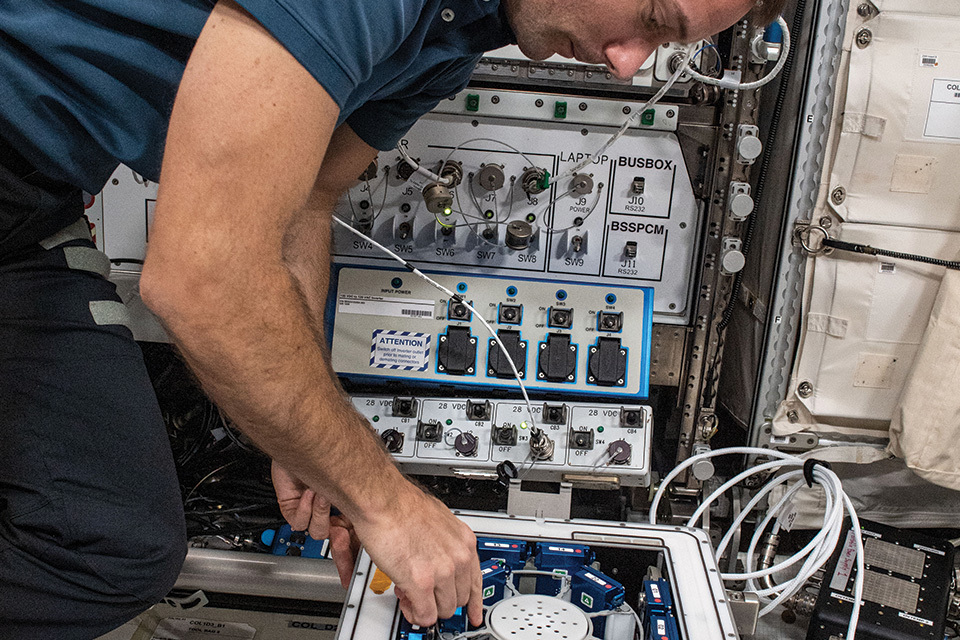
Due to be ready for launch in 2025, the experiments will be supervised by astronauts on board for up to six months before returning to Earth for the results to be analysed.
D(MG)2, led by the Institute of Cancer Research, received £1.2 million from taxpayers to look at diffuse midline glioma; the second most common type of “primary high grade” brain tumour in children that has, so far, been impossible to cure due to the amount of different cell types it contains.
MicroAge II, led by the University of Liverpool, was awarded £1.4 million funding from the UK taxpayers for the second part of its project investigating how the microgravity environment makes astronauts’ muscles weaken in space, in an accelerated way to how muscles get weaker as we age on Earth.
Minister of State at the Department for Science, Innovation and Technology, George Freeman, said:
Dr Paul Bate, Chief Executive of the UK Space Agency, said:
Announced during Brain Tumour Awareness Month, the ISS experiment for D(MG)2 will use microgravity to get a clearer picture of how diffuse midline glioma cells react with each other, so that potential new avenues for developing novel treatments can be identified.
Professor of Childhood Cancer Biology at The Institute of Cancer Research, Chris Jones, said:
The ISS experiment for MicroAge II will use a lab-grown human muscle to observe the effects of microgravity and test whether mitochondria play an important role in muscle loss in space and determine whether applying tension can slow the degeneration process, which could help scientists to rapidly develop therapies to reduce muscle loss as we age.
The UK Space Agency supported MicroAge I, which flew to the ISS in December 2021 to test lab-grown muscle constructs, each the size of a grain of rice.
University of Liverpool’s Professor Malcolm Jackson said:
Equipment for the experiments is built by microgravity hardware specialists, Kayser Space, based in Oxfordshire.
Managing Director of Kayser Space Ltd, David Zolesi, said: