
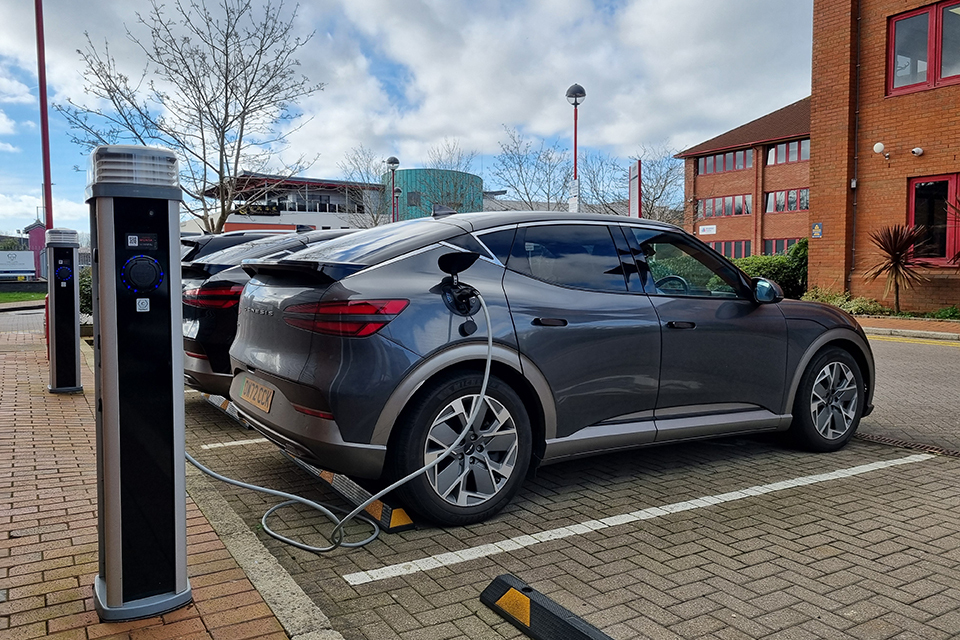
Flat owners, landlords, renters and businesses will be able to get grants of up to £500 per charge point
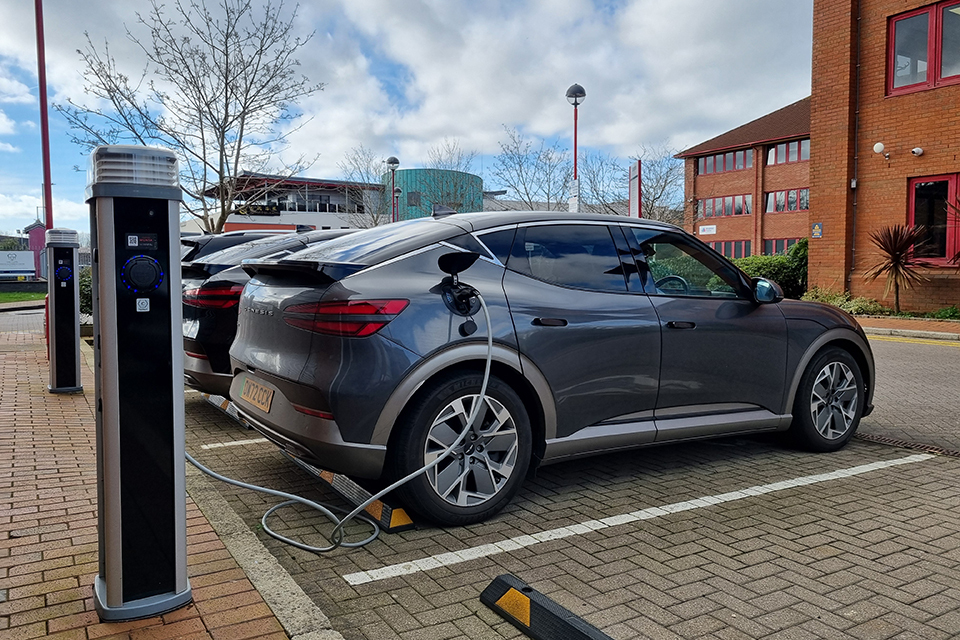
Renters, flat owners, homeowners without driveways and businesses will be able to save up to £500 when installing electric vehicle (EV) charge points, thanks to an over 40% increase in chargepoint grant amounts announced today (25 February 2026).
The uplift will cover almost half the cost of a typical charge point installation until March 2027, helping thousands more drivers access cheaper domestic electricity rates at home or work to power their car for as little as 2p per mile – that’s the equivalent of London to Birmingham for £3.50.
Expanded access to home charging will help more households make the switch and UK businesses gear up for the EV revolution, as latest figures show EV drivers can save up to £1,400 on running costs versus a comparable petrol car when accessing cheaper domestic rates.
The move is the latest in a raft of action from the government to tackle two of the biggest barriers to driving electric – upfront costs and worries about finding somewhere to charge.
Over 55,000 drivers have already saved thousands buying a new EV thanks to the government’s £2 billion Electric Car Grant (ECG), which is offering savings of up to £3,750 across some of the biggest auto brands, and backing the UK auto sector, including the Nissan Leaf made at the firm’s Sunderland plant.
Aviation, Maritime and Decarbonisation Minister, Keir Mather said:
The updates will also simplify the current EV charge point support schemes available by reducing 8 grant types down to 5, streamlining the system so people can navigate and select schemes and discounts more easily.
Last year, a £25 million scheme was also launched making it easier for residents without driveways to install home chargers. Accessed through local authorities, the scheme supports the installation of discreet, embedded pavement channels and is additional to the expanded charge point grant. This means those with on street parking could get help with installing the charger and the cross-pavement channel.
The following updates will be introduced from 1 April 2026:
Read more about the grant changes from 1 April
Alongside the ECG and home and workplace charging grants, the government is expanding the national 88,500 strong public charge point network. In total, £600 million was announced last year to accelerate the charging rollout, and this funding builds on the 100,000 additional new public chargers the government is already helping councils install in the coming years.
Councils will receive funding for the next 3 years to help them boost local charging infrastructure, alongside the continuation of a government funded support service for local authorities which helps ensure charge point installations and locations best serve communities.
Last month, the Department for Transport launched its new ‘Get that electric feeling’ campaign to help drive uptake in EVs by highlighting the benefits of going electric, including savings of up to £1,400 on running costs.
Tina McKenzie, Policy Chair, Federation of Small Businesses said:
Ben Beadle, Chief Executive of the National Residential Landlords Association, said:
Yselkla Farmer, CEO of BEAMA said: