
The Coal Authority is backing an innovative survey that aims to support the return of salmon and trout to a South Wales river
The Coal Authority, which manages the effects of past coal mining, is 1 of 4 organisations supporting the “Reconnecting Our River – The River Afan” project led by Swansea University.
Over the next 16 months the project will combine citizen science and the application of novel environmental DNA tools to find out the river’s health. They will be used to survey the biodiversity within the watercourse and the impacts of physical and chemical barriers on different species along the river’s 230km catchment.
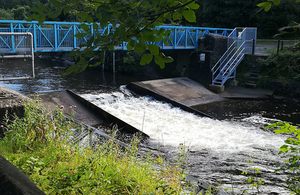
Rising to 500m above sea level at its highest point, the River Afan flows for 26km into Swansea Bay at Port Talbot. In the early 19th century salmon were virtually eliminated from the river because of the pollution caused by local coal mining and metal refining. Although it has been improved in recent years, it still has pollution issues - with 4 out of the 6 Afan water bodies failing to meet the fish targets set by the EC Water Framework Directive.
These chemical barriers, together with physical ones, are to be systematically surveyed by new environmental DNA techniques that will map the occurrence of salmon, trout and invertebrates. In addition, local ‘Citizen Scientists’, which include the Afan Anglers local community interest group, will identify and record physical barriers and points of pollution on the river by using the Barrier Tracker App.
The volunteers will also release and recapture small biodegradable floats to highlight how far they are able to travel in different parts of the catchment.
Chris Satterley, Technical Research and Development Manager for the Coal Authority, said:
One of the designers of the study, Dr. Josh Jones, Postdoctoral Research Officer at Swansea University, added: “Over 96% of rivers in Great Britain are disconnected.
“This project is a great opportunity to bring together academia, industry and volunteer citizen scientists to better understand this issue.”