
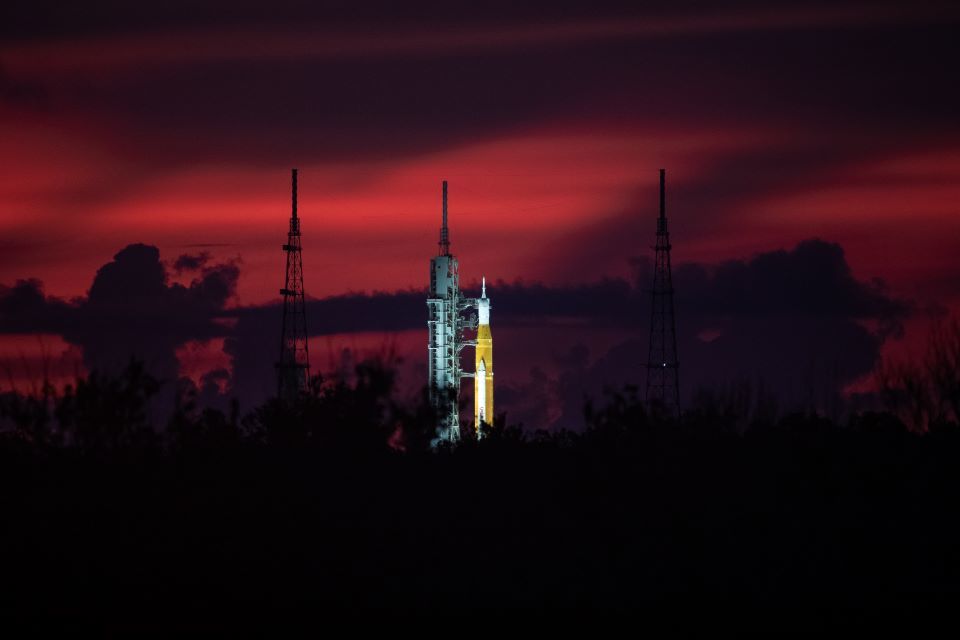
The UK Space Agency welcomes the successful launch of Artemis I
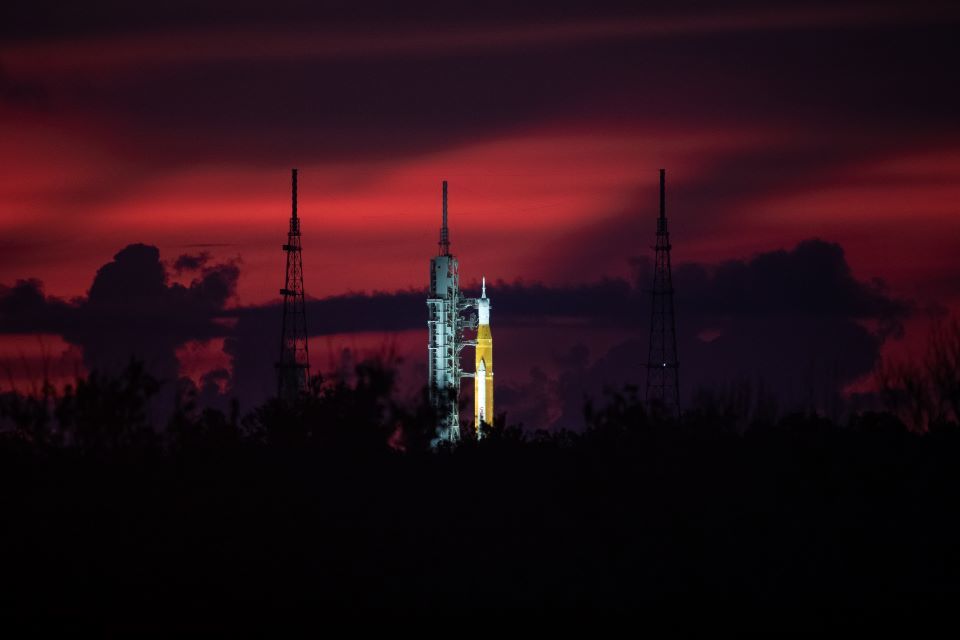
The UK Space Agency has welcomed the successful launch of NASA’s Artemis I rocket to the Moon.
The Artemis 1 Space Launch System (SLS) took off from the Kennedy Space Center in Florida at 6.47am on 16 November, sending the uncrewed Orion capsule, powered by the European service module that includes Orion’s engines, towards the Moon.
The event was postponed from the original planned date on 29 August and a second attempt on 3 September due to technical issues. The rocket was then rolled back from the launchpad to avoid Hurricane Ian.
The successful launch marks the beginning of the NASA-led Artemis programme, which the UK is part of through the European Space Agency (ESA) Human and Robotic Exploration Programme, and which will eventually see humans return to the Moon.
ESA is a key partner in the Artemis programme, delivering Orion’s European Service Module, as well as elements of the Moon-orbiting Lunar Gateway.
Libby Jackson, Head of Space Exploration at the UK Space Agency, said:
National Space Champion David Morris MP said:
During the Artemis 1 test flight, experts at Goonhilly Earth Station in Cornwall will provide operational support, helping to track the spacecraft and up to six of its 10 satellite payloads once in orbit.
Matt Cosby, Chief Engineering Officer at Goonhilly Earth Station, said:
The Artemis 1 mission will test all SLS systems in preparation for the crewed Artemis 2 mission to the Moon. It will demonstrate Orion’s heatshield in lunar entry conditions, operate systems in the flight environment, and retrieve spacecraft, among other objectives.
The mission is expected to last 25 days, including outbound transit, the journey around the Moon and deployment of satellites, followed by a return transit before splashdown in the Pacific Ocean in December.
NASA plans to send the first crewed Artemis mission into space in 2024 and expects the first Artemis astronauts to land on the lunar surface in 2025.
Named after the Greek goddess of the Moon and sister to the god Apollo, namesake of NASA’s first Moon missions, the Artemis programme will see the construction of the Lunar Gateway: a new space station where astronauts will be able to live and work.
The build of the Lunar Gateway will include crucial contributions from Thales Alenia Space UK (TAS-UK) and Imperial College London, provided with backing from the UK Space Agency.
The team at Imperial College London is building the magnetometer sensor that will monitor cosmic and solar rays as part of ESA’s European radiation sensors array that will assist experiments on-board the Gateway to assess how deep space conditions could affect astronauts and equipment.
Meanwhile, TAS-UK is developing the ESPRIT refuelling module, which will enable the spacecraft to safely refuel while in orbit.