
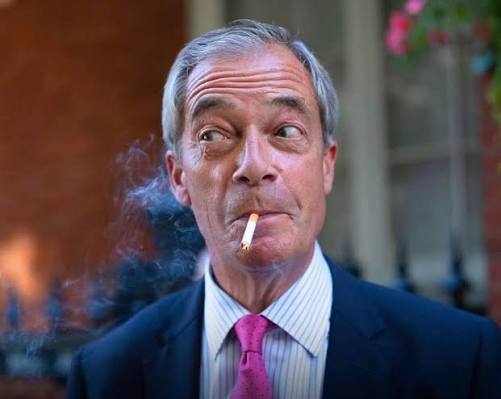
There comes a point when a political party can no longer dismiss every damaging revelation as a smear, a misunderstanding or the work of hostile journalists. Reform UK may believe that point has not yet arrived. The rest of us are entitled to conclude that it has.
An undercover investigation conducted by Verbatim Investigations and independently verified and broadcast by Channel 4 News has exposed conversations at the highest levels of Reform UK concerning foreign-funded political activity and the apparent circumvention of Britain’s electoral-finance laws.
The investigation was elaborate. Journalists posed as a British supporter and his wealthy American father. The supposed American backer offered to finance political polling that would benefit Reform UK. James Orr, Reform’s head of policy, and Dan Jukes, a senior adviser to Nigel Farage, were recorded discussing and arranging three polls that Reform wanted conducted.
Those polls cost £32,500. The money was actually supplied by the undercover organisation, but Orr and Jukes believed it came from an American company controlled by the supposed foreign donor.
That distinction matters legally, because no genuine American benefactor existed. It does not, however, rescue the judgement or apparent intentions of those filmed. A person caught accepting what he believes to be stolen property is not vindicated merely because the property belonged to an undercover police officer. The question is what those involved believed they were arranging and why they believed it needed to remain concealed.
The polling was conducted by JL Partners and subsequently reported by national newspapers as ostensibly independent political research. The public was not told that Reform figures had helped commission it or that its funding was believed to have come from an “off-the-books” American backer. Two of the polls generated favourable headlines for Reform before the May local elections.
JL Partners has said that there is no concern about the accuracy of its polling, but has acknowledged weaknesses in its procedures and is reviewing them. That is an important distinction: the issue is not necessarily whether the figures were fabricated. It is whether political research presented to the public as independent was, in reality, commissioned by people within Reform and secretly funded by someone whom they believed to be an impermissible foreign donor.
The recorded language is damning. Orr was filmed saying that Farage “doesn’t know, won’t know” and that this was something he would “rather not know”. He nevertheless described the arrangement as entirely legitimate. In another recording, Jukes reportedly introduced the undercover operative as a “key donor for off-the-book project” and described the polling as “clandestine” and “hugely important”.
These are not phrases ordinarily associated with transparency.
Farage was later filmed meeting the supposed American donor and his British son. He praised the polling as “amazing”, spoke of its “bang for buck” and celebrated its political effect: “It worked. Boom.” Whatever he may or may not have known when the arrangement began, the footage shows him subsequently discussing its success with the people presented to him as those responsible for funding it. ITV News reports that none of the polling payments appears to have been declared to the Electoral Commission.
Then came the proposed £500,000 donation.
The British operative explained that the money would originate with his American father but could be routed through him as a British subject. Jukes was filmed proposing such a structure and reportedly claiming that other Reform donors had used it, although that assertion has not been independently verified.
The £500,000 was never paid. That must be stated clearly. Nevertheless, channelling an American’s money through a permissible British donor would not transform the true source of those funds. The law looks beyond the name appearing on the cheque. If the British intermediary were merely acting as a conduit for a foreign principal, the donation would remain impermissible.
When the supposed arrangement was discussed in Farage’s presence, he thanked both father and son and described the support as “all above board”. That does not establish that Farage understood every detail or knowingly approved an illegal donation. It does make it increasingly difficult to sustain the comforting fiction that these matters existed entirely beneath him and beyond his knowledge.
Reform initially denounced the investigation as a hoax carried out by foreign-funded climate activists. Farage insists that the party accepted no improper money and broke no law. Yet Reform has now launched an internal investigation, while Orr and Jukes have stepped aside. The Metropolitan Police is assessing the material after the allegations were reported by rival parties. Reform’s response and the suspension of both officials were confirmed on 4 September.
Calling the operation “entrapment” does not answer what the cameras recorded. The journalists did not place the words “off-the-book” or “clandestine” into anyone’s mouth. Nor did they force senior Reform figures to discuss concealing the party’s involvement in polling or routing an American father’s money through his British son.
In October 2025, I wrote The Reform That Failed to Reform. In February of this year, I followed it with Chaos Before Control: Why Organisational Incompetence Matters. My objection to Reform has never been that I disagree with everything it says. On the contrary, I agree with much of its stated political programme.
The problem is that I do not believe it.
More particularly, I do not believe Nigel Farage.
Farage has spent years presenting himself as the plain-speaking outsider who will sweep away the dishonesty, incompetence and evasions of the political establishment. Yet questions surrounding money repeatedly return to him and his party.
A £5 million personal gift from Thailand-based cryptocurrency billionaire Christopher Harborne is under parliamentary scrutiny over whether it should have been declared. Harborne has also donated millions to Reform. Further questions have been raised over donations made by the mother of George Cottrell after Cottrell reportedly transferred substantial funds to her. All concerned deny wrongdoing. Reform has now received another £4 million from cryptocurrency entrepreneur Ben Delo, who was convicted in the United States of failing to implement adequate anti-money-laundering controls before being pardoned by President Donald Trump. The legality of that donation is not presently the accusation; the recurring dependence upon exceptionally wealthy individuals and the continuing uncertainty surrounding the origins, purposes and declaration of political funding are the wider concern.
One disputed transaction might be explained. A succession of controversies becomes a pattern.
Farage increasingly resembles the practised used-car salesman operating from one of London’s seedier forecourts: immaculate patter, absolute confidence and an urgent insistence that the customer stop asking what lies beneath the bonnet. He is close enough to power to imagine Downing Street within his reach, and that proximity appears to be sharpening his desperation rather than improving his judgement.
His choices reveal him.
Where was Farage on 4 July? While Britain’s own political and financial questions accumulated around him, he was in the United States celebrating American Independence (from England) Day with President Trump. When he returned, a Sky News journalist questioned him about financial support connected to convicted fraudster George Cottrell. Farage flared up, accused the broadcaster of harassing his family and threatened that there would be “serious consequences”. Sky News denied contacting his family.
For a moment, the bonhomie disappeared. The cheerful insurgent who claims to welcome difficult questions was replaced by an angry politician attempting to intimidate the journalist asking them.
Reform supporters will undoubtedly say that Orr and Jukes were duped. Perhaps they were. But that defence creates another question rather than answering the first.
If an undercover journalist can arrive with a fabricated identity, mention substantial sums of foreign money and lead senior figures within Reform down the garden path—quite literally—what does that say about their fitness to govern? If these people can be manipulated by a group of reporters, how would they withstand foreign intelligence services, hostile governments, sophisticated lobbyists or genuine billionaires seeking influence?
A party aspiring to govern the United Kingdom cannot plead gullibility as its defence. Naivety at this level is not innocence; it is incapacity.
The alternative is worse. If the people recorded were not merely gullible—if they understood precisely what was being proposed and were prepared to conceal the source of political assistance—then the matter moves from incompetence towards possible illegality.
That determination belongs to the police, the Electoral Commission and, if necessary, the courts. Voters need not wait for a criminal conviction before making a political judgement.
Whether one supports Reform or despises it, the footage remains. It may be contextualised, examined and contested, but it cannot simply be wished away. The video does not lie about the words spoken, the secrecy discussed or the enthusiasm displayed when the polling produced the desired result.
Reform asks Britain to trust it with the machinery of the state. Before doing so, voters should ask whether they would trust these same people with their own money, their own company or even the purchase of that used car.
I would not.