
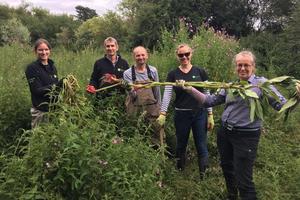
Environment Agency teams are removing the invasive Himalayan Balsam near Colchester to protect the environment and reduce flood risk
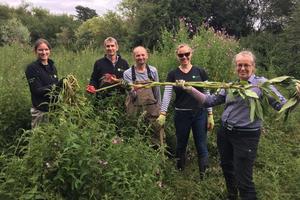
Officers from the Environment Agency and Defence Infrastructure Organisation (DIO) have been working hard to remove invasive Himalayan Balsam along the Roman River near Colchester.
Himalayan Balsam is an invasive non-native species, which mainly grows along river banks and in damp woodland. The plant poses a big risk to the environment as it outcompetes native plant species for nutrients, light and space, often becoming dominant. It can also enter the river channel and block flow and in-river structures, which increases the risk of flooding.
A team of staff volunteered to give up their time to do the work and made a significant difference.
A spokesperson from the Environment Agency said:
If members of the public come across the plant they should only attempt to remove it if it hasn’t set seed - touching it once it has set seed will cause the seeds to disperse up to 7 metres away.
The best method of removal is to pull it up and place it in a pile away from any watercourse, preferably with a plastic sheet underneath to ensure the roots are not able to re-grow.
Members of the public can report sightings of the plant on i-Record.
Seeds can be spread on clothing, equipment and animals. By following the Check, Clean, Dry procedure the spreading of invasive species can be prevented.
Further information on Himalayan Balsam and other invasive non-native species can be found on the Non-native Species Secretariat website.