
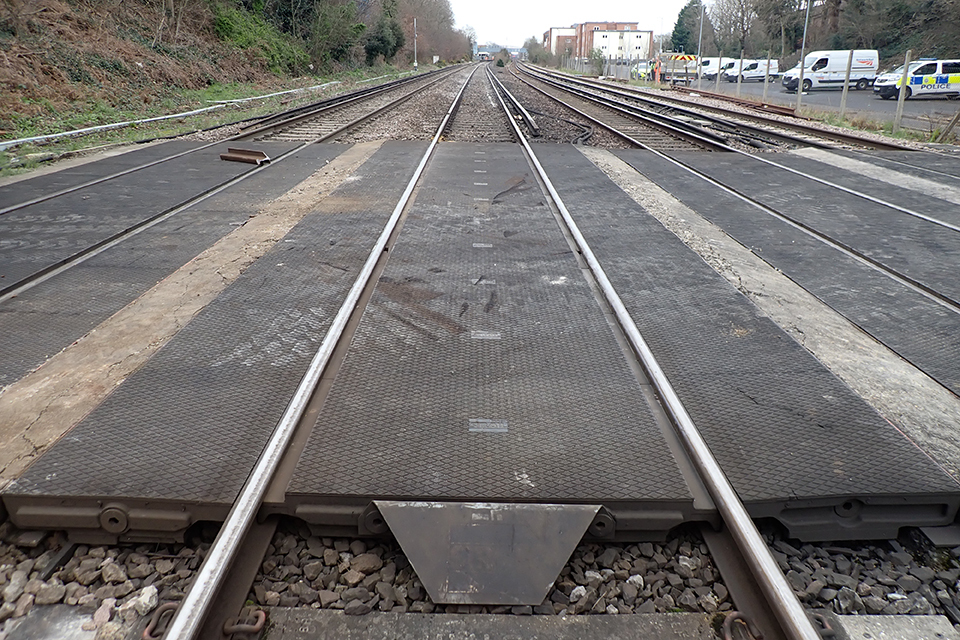
RAIB has today released its report into the derailment of a passenger train near Walton-on-Thames, surrey, 4 March 2024
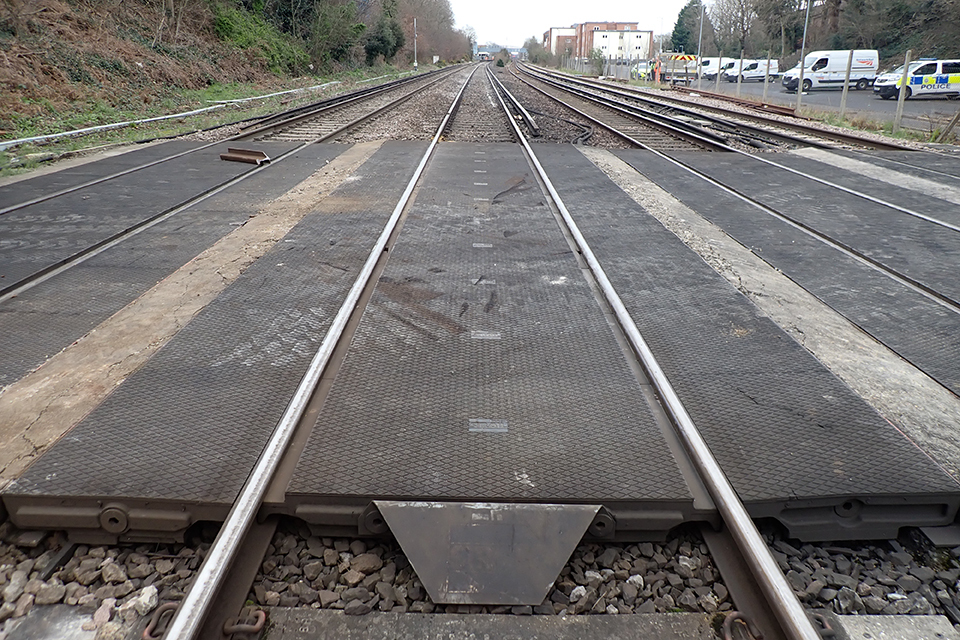
R042025_250217_Walton-on-Thames
PDF, 7.36 MB, 55 pages
This file may not be suitable for users of assistive technology.
Summary
At around 05:40 on Monday 4 March 2024, a passenger train struck a section of redundant rail that had been left foul of the track on the approach to Walton-on- Thames station. At the time of the collision with this rail, the train was travelling at around 85 mph (137 km/h). The front coach derailed, and the train came to a stand around 500 metres beyond the point of derailment.
The redundant rail had inadvertently been left there by a team that had completed work in the area over the previous weekend. Checks undertaken after the work was completed did not identify that a section of redundant rail was in a potentially hazardous position before the railway was handed back for normal operation. This was because no person in charge had supervised the work and because a track handback engineer had not been effectively briefed as to what work had been undertaken before they inspected the track.
RAIB found that the arrangements in place for planning and delivering the work did not effectively manage the risk of a section of rail being left foul of the running line and that the process for inspecting the railway after the work was completed did not provide staff with clear guidance on which areas should be checked. Additionally, the relevant railway rules and standards do not clearly define the roles and responsibilities required to safely deliver work on complex work sites like the one involved in the accident.
Recommendations
As a result of its investigation, RAIB has made two recommendations. The first is addressed to Colas Rail (in consultation with Network Rail), to review its processes related to collecting redundant material when working on or near the line. The second is addressed to Network Rail (in consultation with the Rail Safety and Standards Board) to review the rules and standards relating to how tasks delivered in complex work sites should be co‑ordinated and supervised and to create a coherent process for confirming that the line is safe for the passage of trains after the work is complete.
Additionally, two learning points have been identified. The first reinforces the importance of infrastructure maintainers arranging adequate site lighting. The second concerns the importance of railway organisations ensuring that guidance material relating to superseded standards is removed from resource libraries when new standards are issued.
Andrew Hall, Chief Inspector of Rail Accidents said:
Notes to Editors