
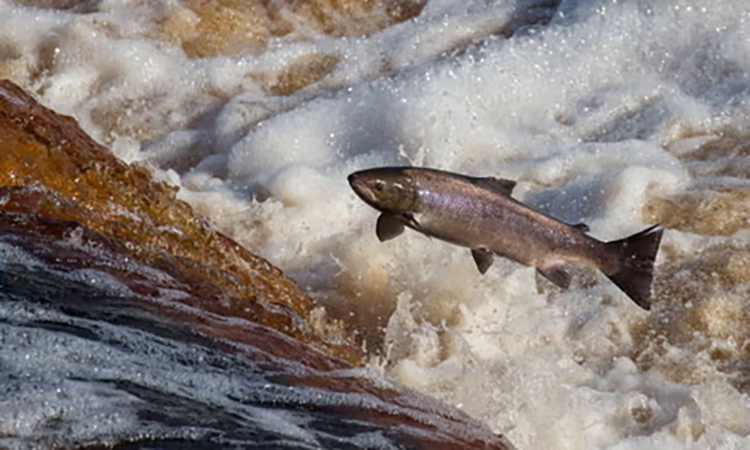
New research from the Environment Agency (EA), Cefas and Natural Resources Wales confirms salmon stocks in England are at their lowest level since records began.
The Atlantic Salmon Stock Assessment for 2025 shows 95% of principal salmon rivers are now below the level needed to sustain their populations. This is up from 88% in last year’s assessment, and the highest level recorded to date. In the past, 15 to 20 young salmon out of every 100 that migrated to sea would return as adults, now only one or two do.
This problem is not unique to England and is observable across the North Atlantic. Much of the cause lies at sea and beyond the control of any single country. However, the EA is taking action to address the decline by removing barriers that block salmon from reaching their spawning grounds, cracking down on pollution and illegal water abstraction, restoring rivers and wetlands and pushing for international action to tackle threats at sea.
In rivers, analysis has shown that the decline in stocks is being driven by water quantity, water quality and damaged habitat. As part of our reporting to the North Atlantic Salmon Conservation Organisation (NASCO), we have set out new commitments to tackle all three issues by 2032.
Under these new commitments, the EA will restore 2,282 hectares of peatland and improve water flow below reservoirs, so rivers have enough water, even during dry spells. It will also closely monitor water companies and other users to ensure they are not taking more water than rivers can sustain.
Alongside this, the EA will continue to increase its inspections of farms and wastewater treatment works more often, and fund over 800 projects to cut pollution from wastewater. It will also clear or improve 105 barriers blocking salmon from their spawning grounds, restore habitat at 252 sites, and plant trees along 648 hectares of riverbank to keep water cool and clean.
Environment Agency Chief Executive Philip Duffy said:
These figures are stark. Where 15 to 20 salmon once returned from every 100 that went to sea, now it’s as few as one or two.
Recovery requires collective action. On the Trent and the Ouse, targeted initiatives have already brought salmon back and we now need to go further to see this pattern replicated across the country.
This year the EA and its partners have committed to restore over 2,000 hectares of peatland, improve fish passage at over 100 migration barriers, and deliver more than 250 habitat restoration projects on principal salmon rivers by 2032.
Salmon are returning to the River Trent and River Ouse following efforts led by the EA to improve water quality and remove barriers to migration, demonstrating that recovery is possible where key pressures are tackled.
The EA is also working with partners across the country to help salmon recover. In Yorkshire, the Great Yorkshire Rivers Partnership is reconnecting rivers and reopening fish passage, giving migratory fish access to habitat they haven’t reached for generations. The return of salmon to parts of the River Don in recent years shows what is possible when rivers are restored and migration routes are reconnected.
Later this year, the EA will publish the next round of River Basin Management Plans which will show that to protect fish, it will need to go faster in removing unnecessary weirs and barriers that impede fish migration.