
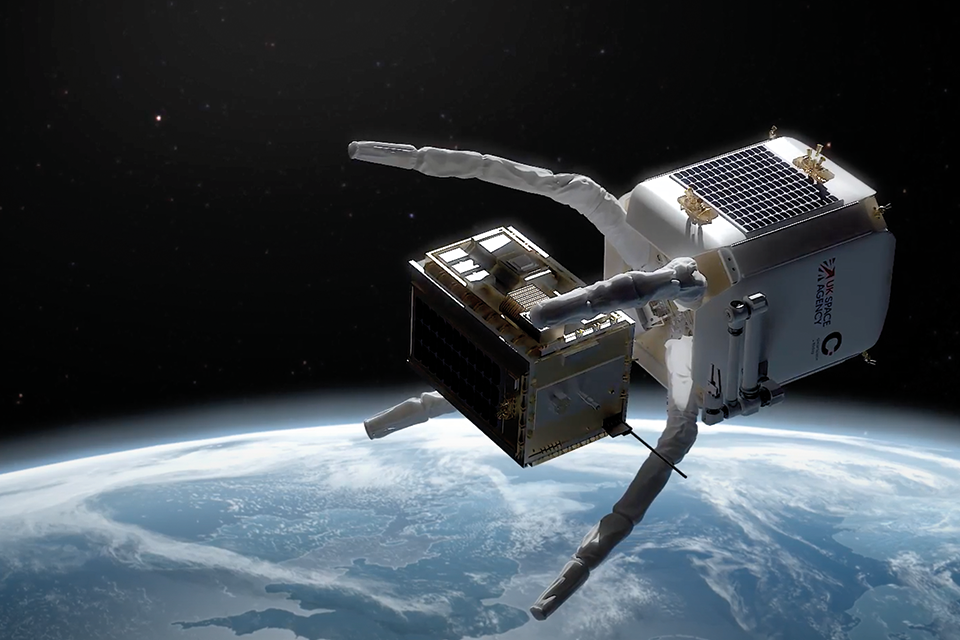
Two UK-based companies are designing missions to clear hazardous space junk alongside the launch of a new programme to back cutting-edge space technology
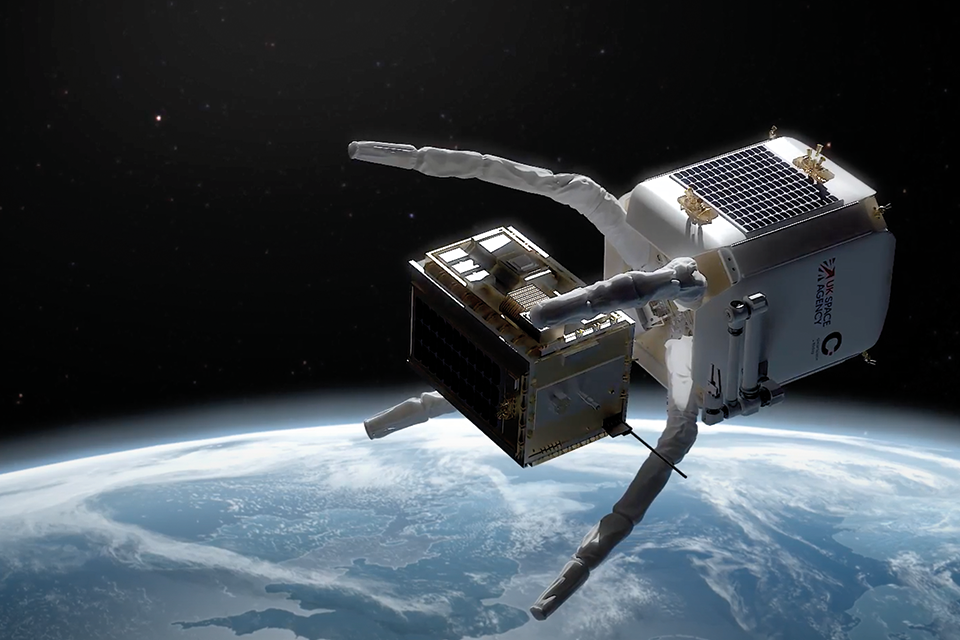
Two UK-based companies are designing missions to clear hazardous space junk alongside the launch of a new programme to back cutting-edge space technology, the UK Space Agency has announced.
ClearSpace and Astroscale have been awarded £4 million from the UK Space Agency to design missions to remove existing pieces of space debris, working with a consortium of industry partners. Once the designs are complete, the teams, along with other UK space companies, could receive further funding to see the UK’s first national space debris removal mission launch in 2026.
The projects will directly support the creation of 70 new jobs, with further opportunities to increase growth in the wider UK space sector, which already supports 47,000 jobs and generates an income of £16.5 billion each year.
The UK Space Agency has also announced a new Enabling Technology Programme (ETP), with up to £15 million to support innovative space research and develop emerging space technologies across the UK.
The first of six calls for funding from ETP opened today and will include technology for in-orbit servicing and manufacturing, which can extend the lifetime of satellites, building resilience and reducing space debris. Future calls will focus on emerging technologies to support the UK’s contribution to future space science missions.
Orbital congestion and space debris is one of the biggest challenges facing the global space sector and the UK Space Agency has committed £102 million, over the next three years, to deliver capabilities to track objects in space and reduce debris. The UK is also leading on global regulation and standard setting to make space activities more sustainable, in line with the government’s National Space Strategy.
There are estimated to be more than 130 million pieces of space debris orbiting Earth, from tiny flecks of paint from spacecraft, to old satellites, spent rocket bodies and even tools dropped by astronauts. This debris can stay in orbit for hundreds of years and present a real danger to satellites and the public services that they deliver, from communications and navigation to environmental monitoring.
Dr Paul Bate, Chief Executive of the UK Space Agency, said:
ClearSpace UK, based in London, and Astroscale Ltd., based at the Harwell Space Cluster in Oxfordshire, were chosen after completing feasibility studies of the missions to remove derelict objects from space earlier this year.
Rory Holmes, ClearSpace UK Managing Director said:
Astroscale Ltd. has been awarded £1.7 million to design a satellite servicer that is capable of removing multiple retired or defunct satellites in a single mission. The Cleaning Outer Space Mission through Innovative Capture (COSMIC) will harness Astroscale’s rendezvous and Remote Proximity Operations (RPO), and debris capture capabilities.
Astroscale most recently proved their magnetic capture and RPO capability in-orbit during the End-of-Life Services by Astroscale-demonstration (ELSA-d) satellite mission launched in 2021.
The COSMIC servicer will be a technological progression of Astroscale’s Sunrise programme ELSA-M servicer – a commercial partnership between the UK Space Agency, the European Space Agency and OneWeb, the global satellite operator. The ELSA-M multi-client debris removal space servicer will be launched ahead of the UK’s Active Debris Removal mission in late 2024.
Nick Shave, Managing Director, Astroscale Ltd, said:
The government recently unveiled its Plan for Space Sustainability to tackle the growing volume of debris in space, which is both environmentally and commercially unsustainable.
The plan includes action to clean up the Earth’s orbit as well as to ensure future projects minimise their footprint, for instance through in-orbit servicing and manufacturing to prolong a satellite’s life or recycle satellites in orbit, as well as retrieving satellites and mitigating debris.
The UK has previously provided funding for the implementation of the UN Office for Outer Space Activities (UNOOSA) guidelines for the long-term sustainability of outer space. To achieve a safe and sustainable space environment, the UK is playing a leading role alongside UNOOSA in the adoption of these guidelines, which set out how countries and companies can help preserve the outer space environment for future generations.
The UK is also the leading contributor to the European Space Agency’s (ESA) Space Safety programme, which provides collaboration and funding opportunities for UK scientists and industry.