
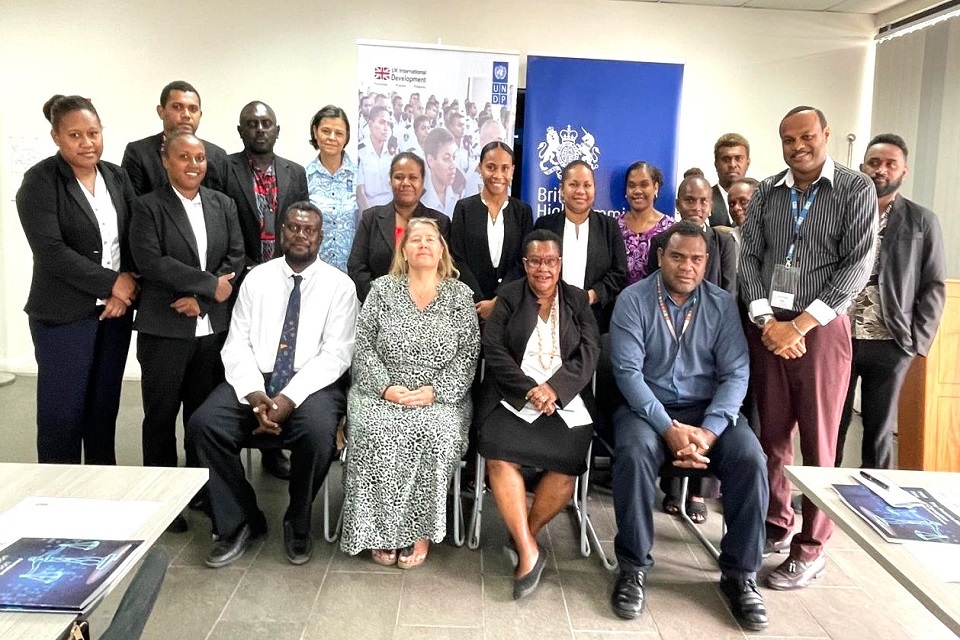
A 3-day workshop on enhancing use of financial intelligence tools in equipping prosecutors for combating corruption and money laundering concluded successfully in Honiara last month
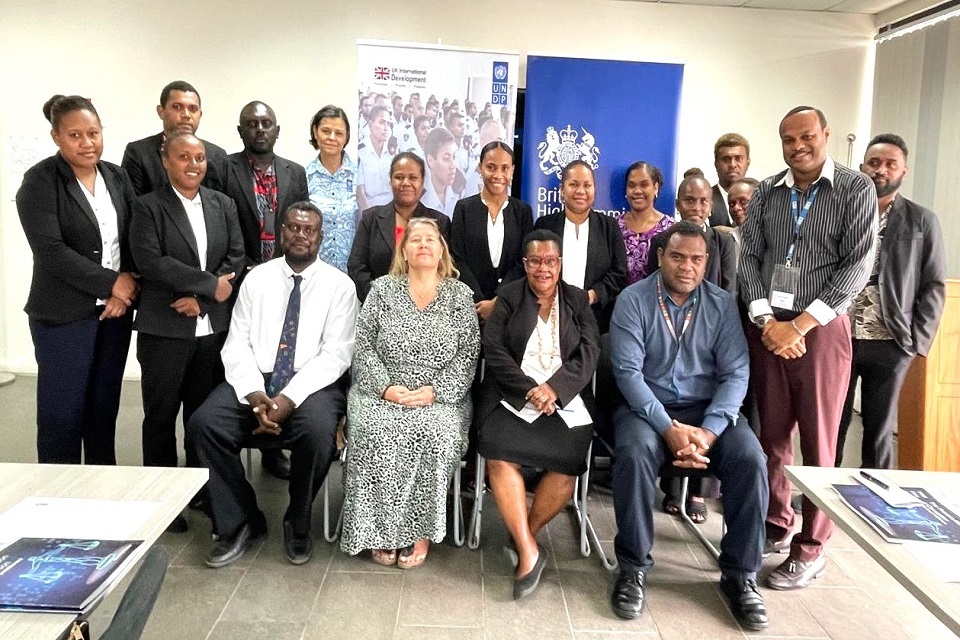
The workshop aimed to address specific, demand-driven needs of the Office of the Director of Public Prosecutions in Solomon Islands by providing a blend of theoretical knowledge and practical mentoring.
Supported by the UK government, the workshop aimed to address the specific, demand-driven needs of the Office of the Director of Public Prosecutions in Solomon Islands by providing a blend of theoretical knowledge and practical, hands-on mentoring.
It focused on enhancing the use of financial intelligence tools to better equip prosecutors in their efforts to combat corruption and money laundering.
British Deputy High Commissioner to Solomon Islands and Nauru, Emma Davis opened the workshop on Monday 24 February saying:
Workshop outcomes include knowledge sharing, exchange of experiences, sharing of best practices based on the knowledge products developed under the previous phases of the Pacific Anti-Corruption project, and adopting innovative approaches to tackling corruption among Pacific integrity institutions.
Capacity-building was among the workshop outcomes in terms of strengthening the technical and operational capabilities of the Office of the Director of Public Prosecutions in Solomon Islands to be able to effectively and efficiently prioritise and prosecute corruption and money laundering cases.
Partnerships were also fostered because of the workshop, enhancing regional collaboration and solidarity among key integrity institutions including financial intelligence units and prosecutorial agencies.
Staff of the Office of the Director of Public Prosecutions in Solomon Islands including resource personnel from the Central Bank of Solomon Islands Financial Intelligence Unit and UNDP Pacific Office in Fiji took part in the three-day workshop.
The Anti-Corruption Project is a UNDP initiative funded by the government of the United Kingdom of Great Britain and Northern Ireland and seeks to strengthen whole-of-society commitment to addressing corruption through increased support from officials, communities and civil society for tackling corruption and by strengthening national policy frameworks, institutions, processes and capacities to prevent and address the effects of corruption across multiple sectors.