
World Elephant Day: UK gives a helping hand to iconic mammals
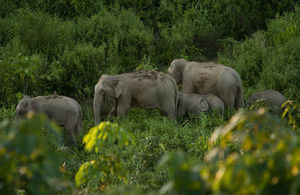
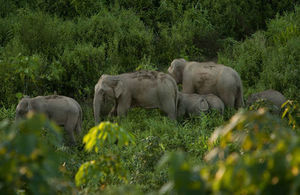
A major UK Government-supported project has helped over 70,000 people and hundreds of elephants live side-by-side peacefully in Myanmar.
The Asian elephant’s habitat ranges across 13 countries in Asia, but it is an endangered species with less than 40,000 remaining worldwide – less than one-tenth of the African elephant population.
In Myanmar, increased deforestation has resulted in wild Asian elephant numbers dropping from 10,000 in the 1960s to under 2,000 by 2004.
The UK is a global leader on the protection of elephants having introduced one of the world’s toughest ivory sales bans last year.
Furthermore, UK aid funding from the Darwin Initiative has been critical in establishing a partnership project called ‘Integrating biodiversity & elephants into peace & development’. Conservation group Elephant Family, together with partner organisations Wildlife Conservation Society, Compass Films and Grow Back for Posterity, are behind the scheme.
The coexistence programme is aiming to reach 12,000 families, which will make a difference to lives and livelihoods through education, poverty reduction and providing space for elephants through land-use changes, which is contributing to achieving the Global Goals.
Speaking on World Elephant Day (12 August), International Environment Minister Zac Goldsmith said:
Myanmar still has the largest tract of intact elephant habitat in Asia and could support a larger number of wild elephants than the current estimated population of 2,000.
Projected growth of the human population in Myanmar is likely to increase pressure on elephants living in the natural environment because of habitat loss. The scheme from Elephant Family and partners works through educating school children and also having a programme to inform local communities about land management.
Elephants have huge cultural and historical importance but, as a so-called ‘keystone species’, they also play a central ecological role in maintaining the biodiversity of the ecosystems in which they live.
Now in its third year, the project has been successful in facilitating forest and biodiversity protection. Through practical support, over 43,000 local people across 63 villages have been empowered about sustainable land-use management - helping tackle poverty alleviation through supporting the foundation of local livelihoods – through land tenure and ownership.
The project is working in communities located in south-central areas of Sagaing, Ayeywarwady, Bago, Mandalay and the south-eastern region of Tanintharyi.
Belinda Stewart-Cox, OBE, Elephant Family Trustee, said:
The Darwin Initiative is a UK aid funded grants scheme that helps to protect biodiversity and the natural environment around the globe. This project is reflective of the UK Government’s 25 Year Environment Plan commitments to protect the natural environment, to secure the benefits of biodiversity for the poorest communities, and to help prevent the extinction of species.
Projects like this are illustrative of the ‘win-win’ approach encouraging sustainable livelihoods whilst conserving some of the world’s iconic and endangered species and landscapes, which benefits us all.
2019 marks the Government’s Year of Green Action, a year-long drive to help people to connect with, protect and enhance nature.