
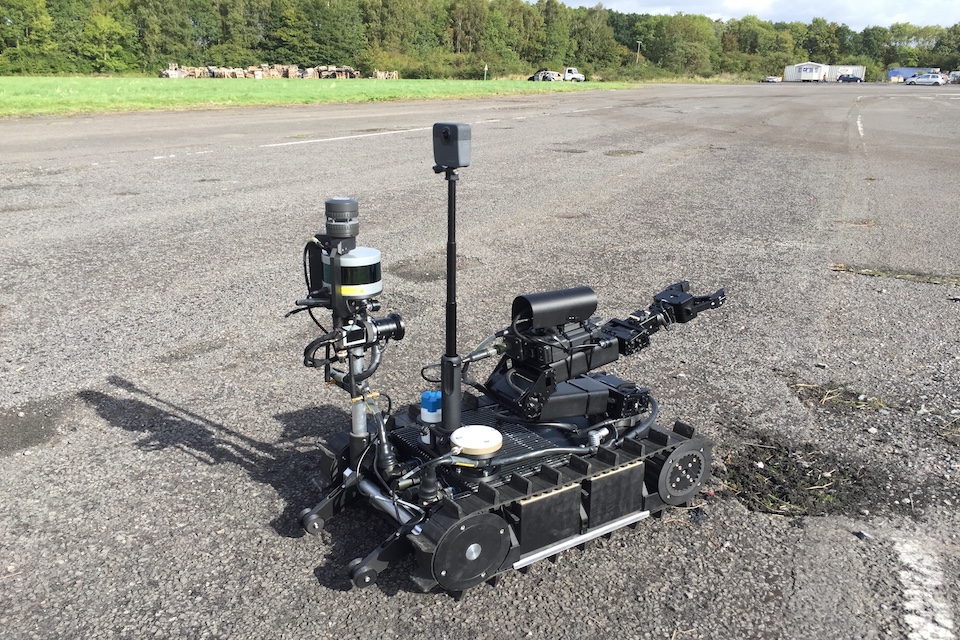
Robots, not people, could respond to future high-risk incidents following the Defence Science and Technology Laboratory's recent testing
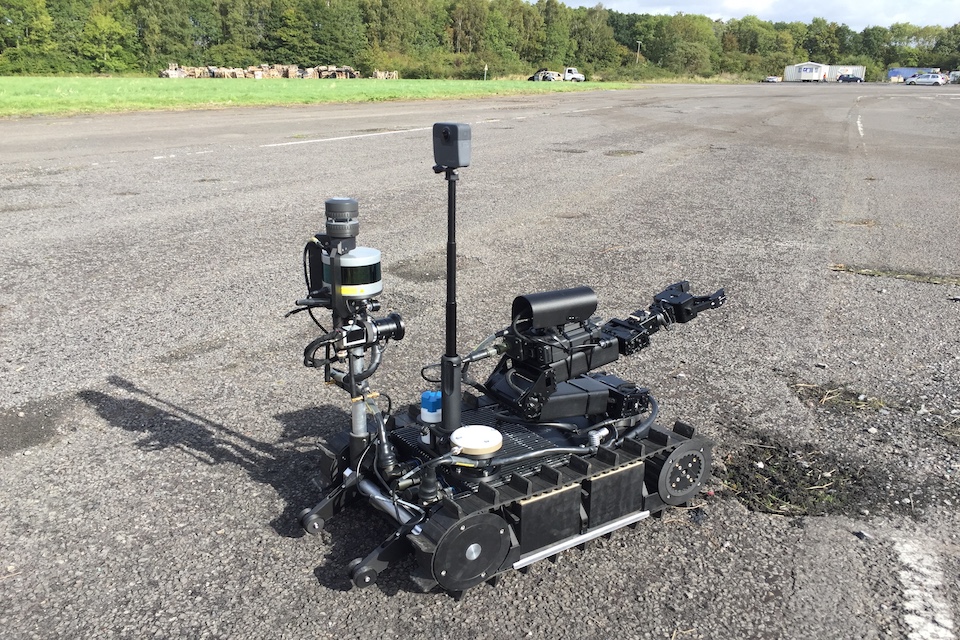
Chemical, biological and radiological (CBR) substances can pose a significant risk to public health, especially in confined spaces which concentrate vapours and spills. Robots, however, allow the human operators to manage any contamination but remain at a safe distance away from any harmful substances.
In a ‘real life’ scenario played out in an empty shopping unit, the Defence Science and Technology Laboratory (Dstl) tested the ability of robotic and autonomous systems to navigate through a building and detect, sample and remediate (clean) a contaminated environment.
This trial builds on experience from a previous trial by deploying the machines in an operational setting and improving their technical capability.
Urban interior spaces pose numerous challenges, such as:
Drones can also struggle with interior airflow and navigation between walls and structures of the same colour.
Ian, Dstl’s technical lead, said:
Specialist Equipment
Dstl worked with a range of innovative academic and industrial partners deploying specialist equipment in the Department for Environment, Food and Rural Affairs (Defra) funded trial. This included the following.
Multi-Directional Drone
Autonomous devices have created a multi-directional drone with a swabbing system to test for contamination and apply decontamination spray.
Robot Control Software
Createc have developed world-leading robot control software to enable their fleet of robots to gather information and samples to deal with an incident including a drone, a robot dog and four-wheeled vehicles.
These vehicles are autonomous but can be switched over to remote control if required, and they can:
Uncrewed Ground Vehicle
The University of Bristol is pioneering an uncrewed ground vehicle with a robotic arm that would work with a tethered drone to carry out decontamination with a spray system at a range of heights.
Ewen, Defra recovery science lead, said:
Dstl and Defra Partnership
This trial is the latest in a series for the Defra, the UK’s lead government department for recovery, who are responsible for the environmental remediation following a homeland CBR contamination event.
Defra has partnered with Dstl to establish a National Technical Advisory Group for CBR Recovery (NTAG-R). It will provide authoritative technical advice on the requirements and capabilities needed to conduct CBR recovery operations.