
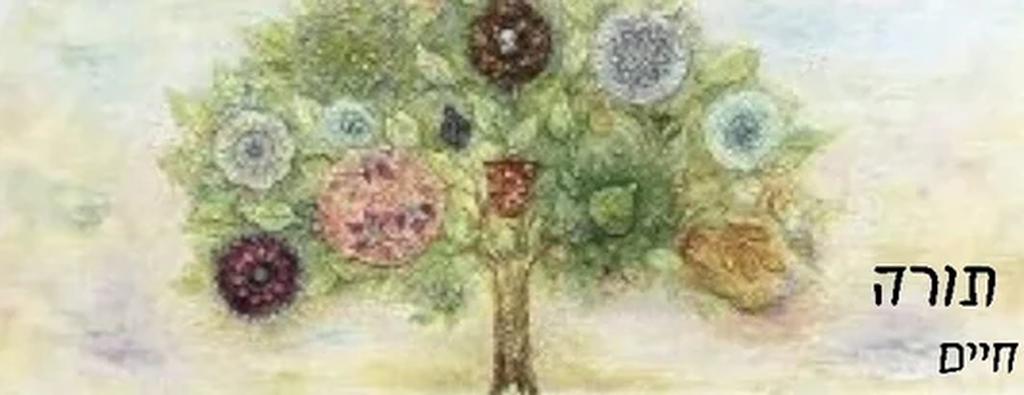
The fruit of the tree corresponds to chesed performed by each Jewish soul
In the very first perek of Tanya, the Alter Rebbe gives an analysis of the Jewish personality: the Two Souls. These two souls are the source of all our activity, both conscious and unconscious.
The first of the two souls is the Nefesh HaBahamis — the animal soul. The second of the two souls is the Nefesh HaElokis — the G-dly soul. The animal soul is not necessarily bad, but self-centred on physical life. The G-dly soul is selfless and only wishes to serve HaShem.
The animal soul takes care of our every physical need. When we go hungry and need to eat, it gives us a drive to find food. When the obstacle becomes too great, the animal soul will do whatever it takes, even if it means stealing. The G-dly soul will join the battle to stop the animal soul. It tells the Nefesh HaBahamis only to find food that is approved by the Torah, and in an honest way.
The Nefesh HaElokis feels the need to control the needs and wants of the Nefesh HaBahamis.
HaShem cannot create our self. Self cannot be given, for then it is not self. We must create it through our choices. The ability to have a relationship and deepen ourselves means that we cannot justify evil, and our actions cannot explain away the specific need for making choices, which is what free will is all about. This also explains why HaShem tolerates evil, pain, and suffering in His world, because of free choice, which allows all that is not good as well.
The Ramchal says: "The Creator created to give, and giving requires 'other.'" Through free choice—and only through free choice—we can create "other." Choice is the essence between good and bad, between the spiritual and the physical.
There are five dimensions of the soul: Nefesh — breath, Ruach — spirit, Neshama — breath, Chayah — life, and Yechidah — the most Divine level of the soul. Nefesh is the engine of physical life. Ruach is our personality. Neshama is the intellectual self. Chayah is the supra-rational, or spiritual, self—the desire to serve HaShem. Yechidah is the essence of the soul, in unity with HaShem. The essence of our soul is literally a Chelek Elokah Mima'al — a piece of HaShem.
When a loved one passes away, it is HaShem reclaiming the spark from within. We recite: "Boruch Dayan HaEmes" — Blessed is the True Judge.
We begin to mourn the moment the soul leaves the body. According to Jewish Law, the levayah will take place as soon as possible, and within 24 hours. The separation of the soul and the body is gradual, and for the first seven days of the thirty-day shloshim we sit Shiva. During the first three days of Shiva we mourn intensely. Shloshim is a thirty-day period when we resume life, but there are still certain mourning practices. When a parent passes away, it is only the children who mourn the parent for a whole year, until the first yahrzeit.
When my mame died I felt numb. I can't remember how I got through it. Gradually, over time, the pain softens. Time heals the wounds. But even years after the first yahrzeit there are moments, a split second, when I hear something that I want to share with my mame. I want to talk to her, ask questions, and feel the love again that she had for us. Life goes on. There is so much to live for. There is a husband, children all dependent on me, family, friends, and a whole community, ב"ה. I am the parent now, sharing the memories of my mame, raising the kinderlach the same way she raised me and my brothers and sisters.
I found consolation in the fact that my mame's soul is back in its pure and spiritual state, and with HaShem.
The dust returns to the ground, and the soul returns to HaShem. When we borrow something, we have to give it back.
The Story of Bruriah and Rabbi Meir
The couple was blessed with two lively and bright boys. The boys brought their parents much naches. Then, one Shabbat afternoon, while their father was lecturing in the Beis Midrash, both sons suddenly fell ill and died. When Rabbi Meir returned home that evening, his wife greeted him at the door.
"A man lent me a fine gift," she told him, "and now he has come and asked me to return it."
"So what is the problem?" Rabbi Meir asked. "If it was borrowed, it must be returned."
"The problem is that the gift is something that I cherish very much, and it is hard for me to part with it," she answered.
"But it is not yours," her husband replied. "You should be thankful that this man lent you something that gave you such pleasure, and be happy to return it."
Then Bruriah led her husband to the bedroom where their two sons lay still in their bed.
We treasure life and mourn the passing of a loved one because life was good. But life goes on, and there is still more simcha to come. After the passing, the levayah, and while sitting Shiva, let it all out—cry! But there comes a time when the pain eases, the wounds slowly heal, and we can find joy in our memories, simcha in life again. We can even laugh about certain memories. Life is a precious gift, ב"ה, and we always find a way to look at the positive side, even in the most challenging times.