
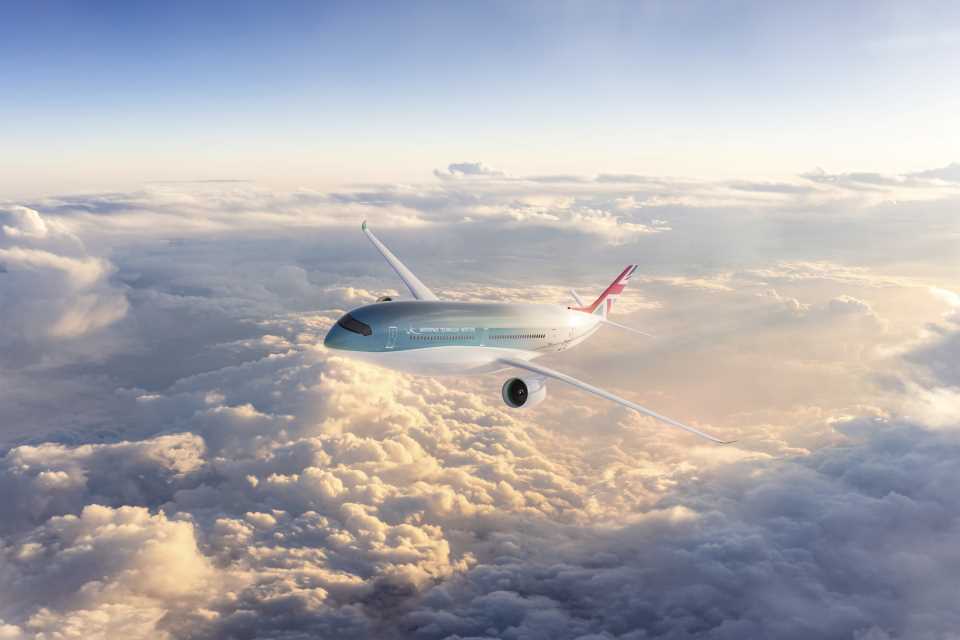
UK project unveils plans for a new liquid hydrogen plane
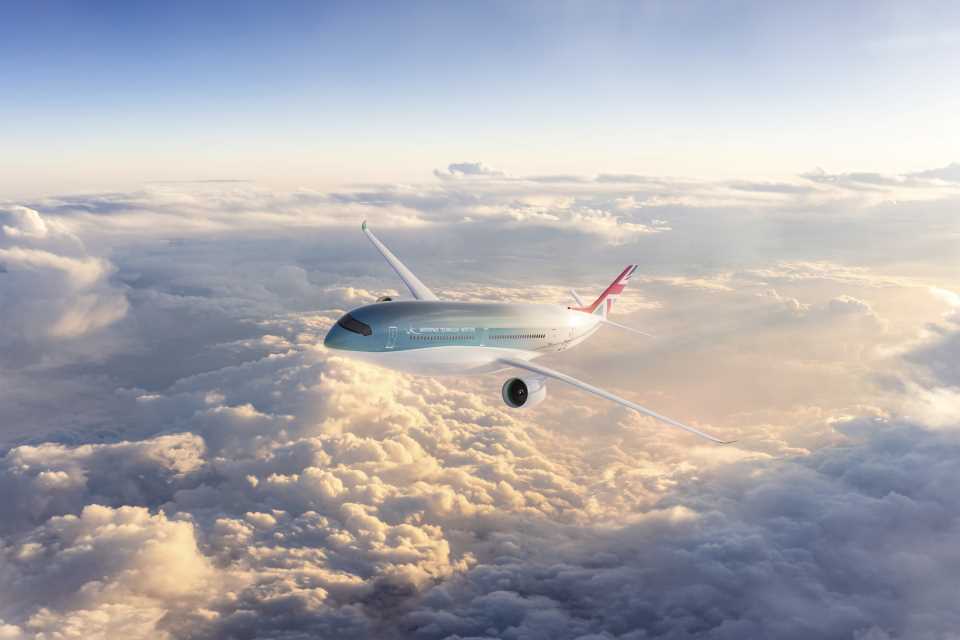
Passengers could one day fly to the other side of the world with zero carbon emissions and just one refuelling stop, thanks to government-funded technology being unveiled today.
The concept aircraft was today (6 December 2021) unveiled by the Aerospace Technology Institute (ATI) ahead of the fourth meeting of the Jet Zero Council, which is chaired by the Transport Secretary.
The FlyZero project, led by the ATI and funded by the government, has developed a concept for a midsize aircraft powered by liquid hydrogen. It is capable of flying 279 passengers halfway around the world without a stop or anywhere in the world with just one stop to refuel.
This means that a zero-carbon, non-stop flight could be operated between London and San Francisco, or that passengers could fly around the world from London to Auckland, New Zealand with just one stop, at the same speed and comfort as today’s aircraft.
The project showcases the huge potential of liquid hydrogen-powered aircraft as the UK drives for a cleaner and greener air travel future and builds on progress already achieved by the Jet Zero Council, a partnership between industry and government with the aim of delivering zero-emission transatlantic flight within a generation.
The council will today meet for the fourth time, ahead of International Civil Aviation Day on 7 December.
Transport Secretary Grant Shapps said:
Business Secretary Kwasi Kwarteng said:
Jet Zero Council CEO Emma Gilthorpe said:
FlyZero Project Director Chris Gear said:
Another technology with the potential to decarbonise flying is sustainable aviation fuel, a low-carbon fuel made from waste materials.
Earlier this year, the UK government set out its ambition to become a world leader in the production of sustainable aviation fuel, launching the £15 million Green Fuel, Green Skies competition to support the early development of trailblazing UK facilities working to turn everyday waste into jet fuel.
The shortlisted winners, 8 industry-led projects that will receive a share of the £15 million in funding, have now had their final funding agreements confirmed by the Department for Transport.
Today’s announcement comes shortly after the COP26 climate conference in Glasgow, which saw ambitious new international pledges to decarbonise transport, including the agreement by 24 countries – representing around half of global aviation emissions – to work together to achieve a new aviation decarbonisation goal.