
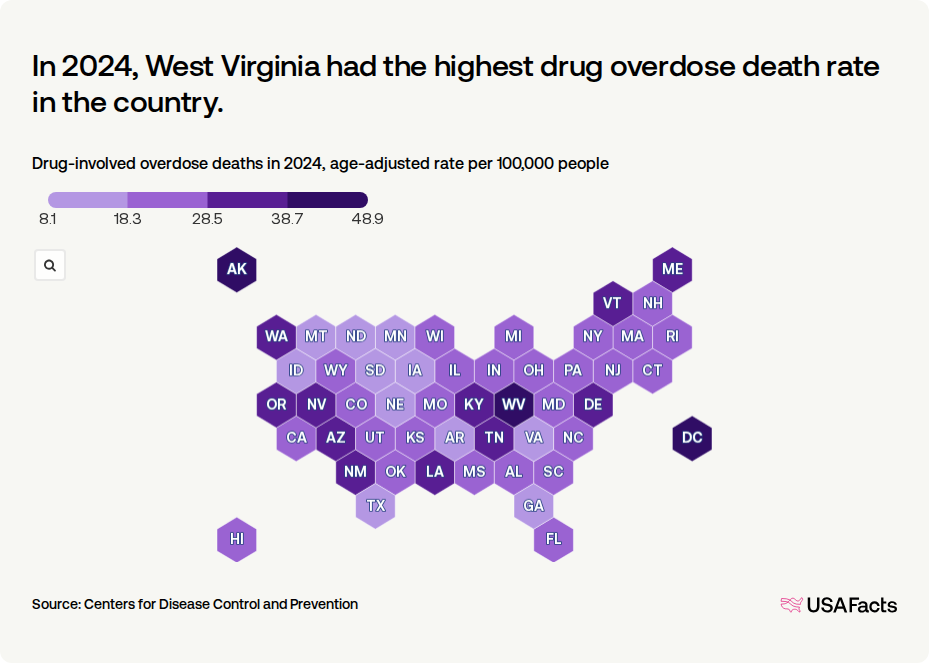
Drug overdose deaths have always been a public health concern, but they are a particularly acute concern now, with rates climbing during the pandemic and staying above 2019 rates ever since. The latest Centers for Disease Control and Prevention (CDC) data provides a deeper look at the drugs leading to deaths, and where.
- In 2024, 79,384 people died from drug overdoses. That’s 23 deaths per 100,000 people. This is the fifth-highest drug overdose death rate since the CDC started tracking this data in 1999.
- The overdose death rate ranged from 8.1 per 100,000 people in Nebraska to 48.9 per 100,000 in West Virginia. Washington, DC, and 25 states had death rates higher than the US rate overall. (The rates we’re discussing are age-adjusted. Find out what that means in the article.)
- Between 1999 and 2024, death rates involving fentanyl and other synthetic opioids rose 48-fold. However, the rate from fentanyl/opioids was down in 2024 to 14.3 per 100,000 after hitting a historically high rate of 22.7 per 100,000 in 2022.
- The overdose death rate has climbed in 19 of the last 25 years. It rose 57% in the decade from 2014 to 2024.
- In 1999, cocaine was involved in more overdose-related deaths than any other drug, at a rate of 1.4 per 100,000 people. Fentanyl and related opioids had one of the lowest rates: 0.3 per 100,000.