
Peter Higgins given suspended sentence for illegally storing and burning waste at Gedney Dyke
A South Lincolnshire businessman has been given an 18-week suspended sentence for storing and burning waste illegally at a site in Gedney Dyke, despite repeated warnings from the Environment Agency. He was also ordered to pay costs and a victim surcharge totalling nearly £7,000.
Peter Higgins, 73, the owner of PJH Bathrooms, Kitchens and Tiles Ltd, based at Yew Lodge, Hallgate, Gedney Dyke, stored waste on ground next to the company showroom without a permit for over 2 years. He was also responsible for lighting fires that released polluting chemicals into the atmosphere and caused a nuisance.
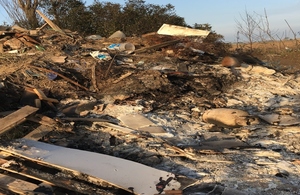
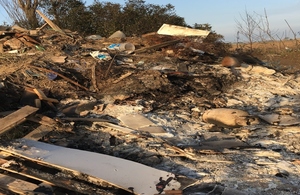
Lincoln Magistrates’ Court heard how on one occasion Environment Agency officers, investigating reports of thick black smoke at the site, found the remains of items unsuitable for burning, including a chest freezer. Photographs taken by the officers showed waste including plastics, cardboard, polystyrene, textiles, mattress springs, toilets and glass strewn across the site.
Environment Agency prosecutor Sarah Dunne told the court that Environment Officers had made every effort to support Mr Higgins, providing advice, writing letters and giving both formal and informal warnings over more than 2 years. Mrs Dunne explained that they had visited him at least 6 times and gave him many chances to become compliant. Despite their efforts, Higgins continued his illegal activities.
Passing sentence, District Judge Peter Veits told Higgins:
Environment Officer Jamie Holloway said:
The incidents took place between 5 February 2017 and 6 June 2019.
Higgins was prosecuted under the Environmental Permitting (England and Wales) Regulations 2016, and the Environmental Protection Act 1990. In addition to the suspended sentence, he had to pay court costs and a victim surcharge totalling £6,787.
Additional Information
Under the Environmental Permitting (England and Wales) Regulations 2016, the deposit, treatment and storage of waste are permitted only with a permit issued by the Environment Agency.
The Environmental Protection Act 1990 prohibits the storage of waste in a manner likely to cause environmental pollution or harm to human health, including causing pollution by fire.