
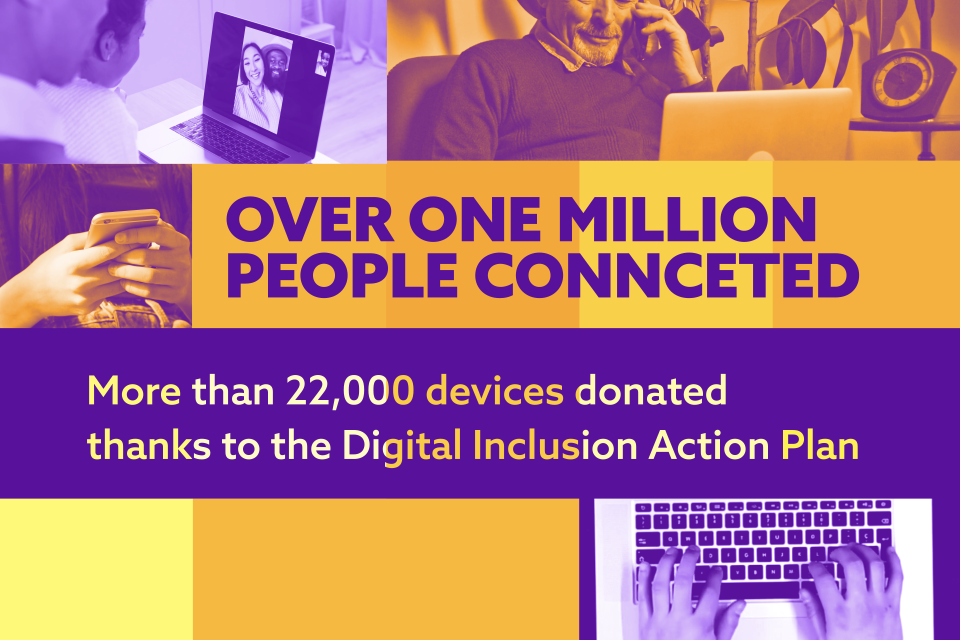
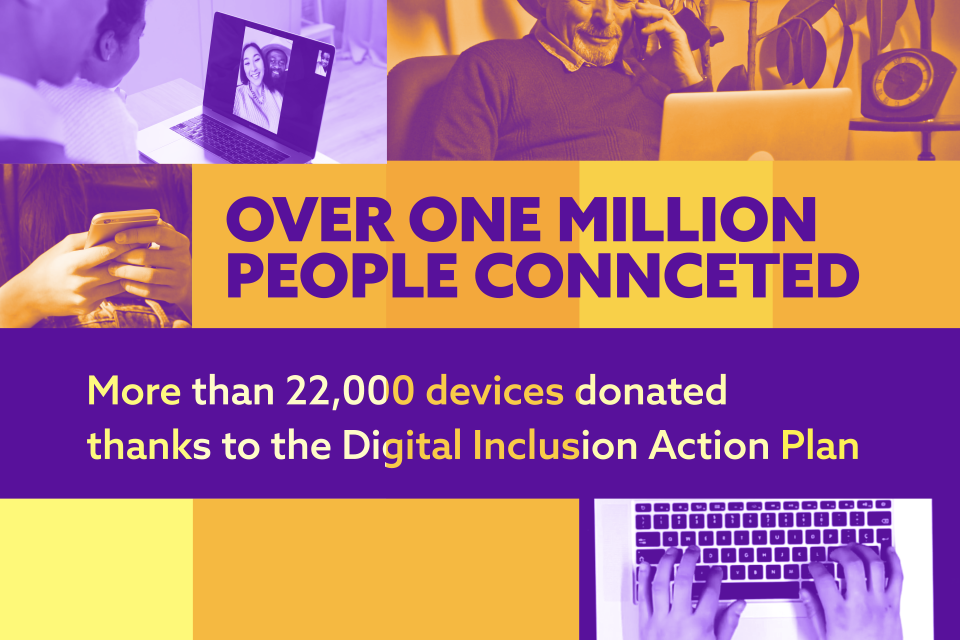
More than a million people including the elderly, unemployed, and people living in rural communities have benefited from the combined efforts of government, industry and charities to boost digital inclusion and help more people get online
Being able to use a device and get online has life changing benefits for people whether that means now being able to manage your finances through online banking, or being able to build a CV and look for a new job, or accessing better online deals for the weekly shop - the online world makes life easier, cheaper and more convenient.
Secretary of State, Liz Kendall said:
In a progress report published today, DSIT has confirmed all government commitments made in the landmark Digital Inclusion Action Plan - the first government strategy to tackle digital exclusion in a decade - have been fully delivered or are on track for completion.
This has been backed up by major industry partners delivering digital inclusion and skills pledges through the plan which have helped over 1 million get better broadband and mobile connections, secure more affordable rates, and access the support, devices and skills training they need.
The first year of the action plan saw government deliver a taxpayer funded £11.9 million Digital Inclusion Innovation Fund, supporting over 80 projects in communities across England, as well as funding provided to the devolved governments to ensure locally-led digital skills and support services were available UK wide.
It’s also enabled the donation of over 22,000 laptops, phones and tablets through a combination of the IT Reuse for Good Charter and government’s own digital device donation pilot scheme. In the first year the charter has already signed up 42 organisations who have committed to recycling and refurbishing their unused devices away from landfill and into the hands of people who need them. That’s thousands of devices now helping address one of the most practical barriers people face to getting online – having a suitable device to use.
The action plan has already made a real difference for people in communities across the UK including year 8 student Ahmed in Wales who can now complete his homework and develop his digital skills after receiving a donated device. Thanks to Sky’s hub support, Jake (name changed to protect their privacy) in Yorkshire built his digital skills and confidence and went on to secure his first apprenticeship. And through a Government-funded digital inclusion project with Women’s Wellbeing, Harooj in Birmingham learnt to use tech to develop her CV, look for jobs, and boost her confidence, and has secured a job alongside juggling family life.
As part of government’s commitment to ensuring everyone has the digital skills they need, DSIT will now take stewardship of the Essential Digital Skills (EDS) Framework and its associated national survey, previously managed by Lloyds Banking Group. The EDS Framework will be updated, in consultation with stakeholders and informed by public engagement, to ensure it reflects the digital skills needed for work and life today, including the growing importance of AI, and staying safe online.
This will mean government can clearly set out what specific digital skills people need to be successful in a rapidly evolving economy, and better track UK adults’ digital capabilities.
Case studies detailing the impact of the Digital Inclusion Action Plan
Case study 1: IT Reuse for Good Charter signatory - DVLA device donation to Ahmed (made possible by the Digital Inclusion Action Plan’s commitment to start an IT Reuse for Good Charter)
IT Reuse for Good Charter signatory, the Driver and Vehicle Licensing Agency (DVLA) is helping change lives with device donations. Through the donation of refurbished laptops from DVLA Swansea provided to Grange Pavilion Study Club via Race Council Cymru’s National Minority Ethnic Youth Forum, Year 8 student Ahmed has experienced a transformative change in his education and home life.
Before receiving the device, he had never owned or had regular access to a laptop. This made completing homework difficult and limited his ability to research or engage with digital learning platforms. Since receiving the laptop, he has been able to complete homework more independently and on time, and his confidence in using technology has grown significantly.
Ahmed said:
The laptop has become a shared resource at home. Ahmed’s younger siblings now have the chance to develop basic digital skills and explore educational games too. This donation has not only supported his academic progress but has also strengthened digital inclusion within his household.
Case study 2: Women’s Wellbeing: Getting into work through digital confidence (a project made possible by the Digital Inclusion Innovation Fund)
Through one-to-one digital support delivered by Women’s Wellbeing and funded through the Digital Inclusion Innovation Fund, women in deprived areas are being offered tailored coaching to learn essential digital skills – from setting up email to completing quality job applications. Rooted in local communities, Women’s Wellbeing has opened up pathways into volunteering, further training, and employment. This has worked. Within 2 months, 2 women secured their first ever job, and many more are growing in their confidence, skills, and readiness to enter the workplace.
After being out of work for 11 months Harooj joined Women’s Wellbeing’s 6‑week Digital Skills and Employability course. The course, funded by Government’s Digital Inclusion Innovation Fund, fit around her family life and rebuilt her confidence step by step. Through tailored CV support, interview practice, LinkedIn training and hands-on use of AI tools, Harooj strengthened her digital skills and has now been able to secure a part-time receptionist role that works around her children, and she feels confident about her future.
Harooj said:
Case study 3: A laptop that helped rebuild a life (made possible by the Digital Inclusion Action Plan’s commitment to start a government device donation pilot)
Maria (name changed to protect their privacy) is a single mother who had recently escaped domestic abuse with her 2 young children. Living in temporary accommodation and relying on benefits, she wanted to return to work and regain financial independence – but had no laptop to apply for jobs or work remotely. Through the government device donation pilot, Maria received a refurbished laptop. With it, she was able to apply for jobs, access essential services, and plan a return to work that fit around caring for her children. Maria told us the laptop had “made a big difference” to her daily life at a time when she was rebuilding from scratch.
Case study 4: Virgin Media O2’s Community Calling Programme: Lucy – survivor of domestic abuse (part of VMO2’s Digital Inclusion Action Plan pledge)
Lucy (name changed to protect their privacy) fled an abusive relationship with very few belongings and no access to a personal phone. This made it extremely difficult for her to seek confidential support, attend remote appointments, or stay connected with specialist domestic abuse services.
Receiving a phone through the Happy Tears Foundation, supported by Virgin Media O2’s Community Calling programme, allowed Lucy to safely contact support workers, access counselling services, and rebuild her independence. The device is becoming a vital lifeline, enabling her to plan next steps without relying on others or risking her safety.
Lucy said:
Virgin Media O2’s Community Calling programme, delivered with environmental charity, Hubbub, has helped over 32,000 people in need get online by providing free phones to people who need them.
Case study 5: LS-TEN Sky Up Hub: Jake - from exclusion to employment (part of Sky’s Digital Inclusion Action Plan pledge)
Jake (name changed to protect their privacy) first came to the LS-TEN Sky Up Hub just outside Leeds when he was 16. He had struggled at school, lacked confidence, and wasn’t sure what direction to take next.
At the Hub, Jake had free access to the internet, laptops and practical support. This gave him a safe place to build digital confidence at his own pace. With support from staff, he learned how to search for jobs online, prepare a CV and practise interviews.
Over time, Jake’s confidence grew. With the skills and support he gained at the Hub, he secured his first apprenticeship. He is now progressing towards a new apprenticeship in prosthetic limb manufacturing and building a career he previously didn’t think was possible.
Notes to Editors
Baroness Hilary Armstrong, Chair of the Digital Inclusion Action Committee said:
Jemma Waters, Head of Customer-First Transformation, Lloyds Banking Group said:
DSIT’s stewardships of the EDS framework complements government’s digital and AI upskilling drive to get more people the skills they need for today’s workforce, through programmes including AI Skills Boost and the Skills for Life digital skills initiative.
With one year of achievements secured, government will now continue pushing ahead on action, guided by the Digital Inclusion Action Committee – Government’s expert external advisory board. This will include learning from and upscaling established community-based digital inclusion work, expanding digital device donation, and improving the accessibility of online services.
Recognising the importance of people getting online in order to actually benefit from programmes like digital ID and digitised health services and support, the Digital Inclusion Ministerial Group will coordinate between departments to ensure digital inclusion is embedded into the delivery of major government projects from the start.
Read in full the Digital Inclusion Action Plan One Year Report