
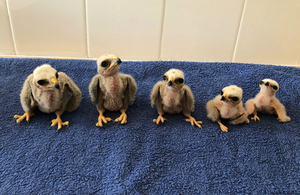
It has been a record breeding season for hen harriers in England according to figures from Natural England
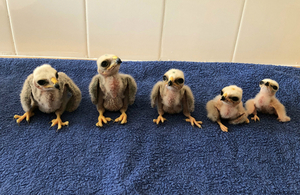
Hen harriers have enjoyed a record year for breeding success in England, Natural England has announced today (11 August).
2019 has been a highly successful year for the iconic bird of prey in England, with a total of 15 nests producing 15 successful breeding pairs and 47 chicks – improving on the previous highpoint of 46 set in 2006.
The positive result means the last two years have produced 81 fledged chicks, surpassing the total for the previous five years put together (55). The chicks have also hatched in a wider variety of areas this year, including in Northumberland, Yorkshire Dales, Nidderdale, Derbyshire and Lancashire - leading to hopes that a corner has been turned in the restoration of the hen harrier population.
Tony Juniper, Chairman of Natural England, said:
Once again a wide range of organisations have come together to work in partnership to make sure that the hen harrier chicks are well looked after and protected for the future. This collective effort has helped improve the communication and liaison between land managers.
This includes: Natural England, RSPB, Forestry Commission, the Moorland Association, United Utilities, the National Trust, Hawk and Owl Trust, Yorkshire Dales National Park Authority, Northumberland National Park Authority, Peak District National Park Authority, Nidderdale & Forest of Bowland Areas of Outstanding Natural Beauty and Northumberland Wildlife Trust, Game & Wildlife Conservation Trust, local police forces, individual Estates and their keepers, farmers, and a large number of volunteer raptor enthusiasts.
A high proportion of this year’s chicks have been fitted with satellite tags, which will allow Natural England to monitor the progress of the birds as they move away from their nest areas.
In February, Natural England published a study paper which analysed the findings of satellite tagging data collected over 10 years. The study revealed that young hen harriers in England suffer abnormally high mortality and the most likely cause is illegal killing.
Support for this year’s success
Superintendent Nick Lyall, Chair of the raptor persecution priority delivery group, said:
Ian McPherson, Member Champion for the Natural Environment for the Yorkshire Dales National Park Authority, said:
Dr Adam Smith, of the Game & Wildlife Conservation Trust, said:
Amanda Anderson, Director of the Moorland Association, added:
Nests in different places
Many of the nests (11) were on land managed for grouse shooting.
Six of the nests were diversionary fed, offering supplementary food to the chicks since they have hatched. This technique ensures a better fledging rate and diverts the adult birds’ attention from taking grouse chicks.
The three nests which failed were all in Northumberland – two were lost to bad weather and the third was predated.
Together, all of the partner organisations are determined to see an improvement in the conservation outcomes of hen harriers and are working to bring about a cessation of the persecution of this magnificent bird as part of sustaining economic driven grouse moors.
New approaches
The introduction of a trial brood management scheme in 2018 through which landowners volunteered to test new methods to help reduce parent bird predation on grouse chicks has been welcomed as a positive development in efforts to improve hen harrier numbers.
Brood management is part of a scientific trial to find another mechanism to reduce predation of grouse chicks. The hen harrier chicks have been released back into the locality from where they were collected once they were capable of fending for themselves.
Recently, Operation Owl became a national campaign working with the National Police Chiefs’ Council and police forces across England and Wales. This scheme will raise awareness of raptor persecution amongst the wider public and police officers. It may also lead to increased reporting of criminal activity against wildlife.