
Bamidbar Chapter 4:21-8 - Alienation and Reconciliation
This week’s reading consists of seemingly disparate themes but really, they all connect in a parable of alienation and reconciliation.
Everything was prepared for the invasion of the Land of Israel. The tribes were counted. The leadership primed, the flags raised, and they were ready to march. They look impressive but really beneath the surface things were unstable. They panicked and were forced back into the desert for another generation. They had betrayed G-D.
The Torah then brings in a law about betrayal that deals with individual issues, rather than national ones. The ordeal of the Sotah was not just about suspicion and how to deal with it. A Sotah was a woman who had she had betrayed her husband, but there was no clear evidence she had done something wrong. Although it is framed in terms of a wife betraying a husband, some commentators saw it as a metaphor for any betrayal. A climate of mistrust that undermines a relationship and the stability of society.
The Rabbis of the Talmud set out to recast the issue as one designed to repair rather than punish. They saw this as an example of where communication between husband and spouse had broken down. They were in a state of pain as much as conflict. Instead of resorting to divorce or rupture, the Torah created a ceremony in which a suspect wife came before the priest and had to drink water into which G-D’s written name was dissolved to encourage a confession. It was an attempt at reconciliation. This was the only example of G-D’s name being intentionally obliterated in the interests of peace, in bringing a husband and wife back together. And if it were clear that nothing untoward had happened, the couple would be reconciled, they would have children and live happily ever after! Although the initial law only imposed the ordeal on a woman, they said it was an ordeal for the husband too. And in the end, they suspended it entirely. No one was blameless.
Then the Nazirite was someone who had either failed religiously or wished to compensate for some defect or weakness and took on a vow of self-denial. Something he had to atone for afterward because denying oneself something that the Torah approved of, was considered a kind of rejection of G-D. As the Talmud says, “ Isn’t it enough with what G-D has forbidden? Why need to add on more restrictions?” Here too there, in a way, there is a failure in a relationship that needs to be rectified.
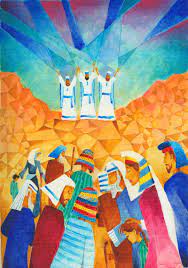
These three examples are of three areas of failure, national, family, and personal. The Tanakh is a record of human shortcomings that can be overcome despite rupture and disappointment. That’s human nature. With G-D, as with humans. We betray and become alienated. But we can if we want to find a way back into a creative, positive, and loving relationship. This is why these episodes end with the blessings the priests give to Israel from G-D. “May G-D should bless us and protect us, may the Divine presence should be within us and be benevolent, and may G-D forgive us and bless us with peace.”
And talking of peace, Shabbat Shalom