
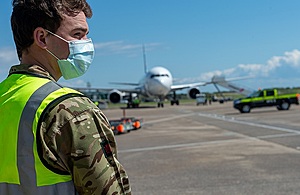
The UK Armed Forces are ensuring they keep the country safe, supporting the national response to Covid-19, continuing their critical operations at home and overseas, while ensuring they prepare for future tasks in a deliberate and disciplined manner
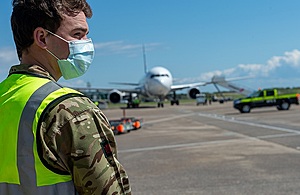
While some basic training and exercises were paused as a result of Covid-19, including the NATO exercises ‘Cold Response’ and ‘Defender 2020’, the Armed Forces have continued to fulfil non-discretionary activities:
Maintaining all these operations requires a level of training to continue, ensuring both personnel and equipment remain ready to be deployed, both for scheduled operations and in case of unexpected tasks needed to guarantee national security.
In order to continue defending the nation over the longer term, the UK Armed Forces must also conduct routine force-generation and is doing so in line with government guidelines.
This activity includes all types of training, including sea training for HMS QUEEN ELIZABETH, the UK’s future flagship aircraft carrier; basic and advanced flying training by the RAF; Royal Marine Commando training; Basic Training for Army recruits and Officer Cadet Training at the Royal Military Academy of Sandhurst.
Our Armed Forces are rightly classed as ‘key workers’ because they are tasked with keeping the nation safe. The health of our personnel and their families are also important, so this is being conducted in accordance with official guidance, and full activity will only resume following Government direction.
For the ongoing training, stringent protective measures are in place after specific planning processes and full risk assessments have been conducted, in accordance with Government and health guidance. The training is being configured and scaled in a deliberate and disciplined manner, enabling the military to continue its routine activities safely and while maintaining an infection rate below the national average.
Examples of steps taken to enable safe training include social distancing during roll calls and physical training, isolating at the beginning of courses and reconfiguring communal spaces such as canteens, sleeping quarters and classrooms.
Minister for the Armed Forces, James Heappey said: