
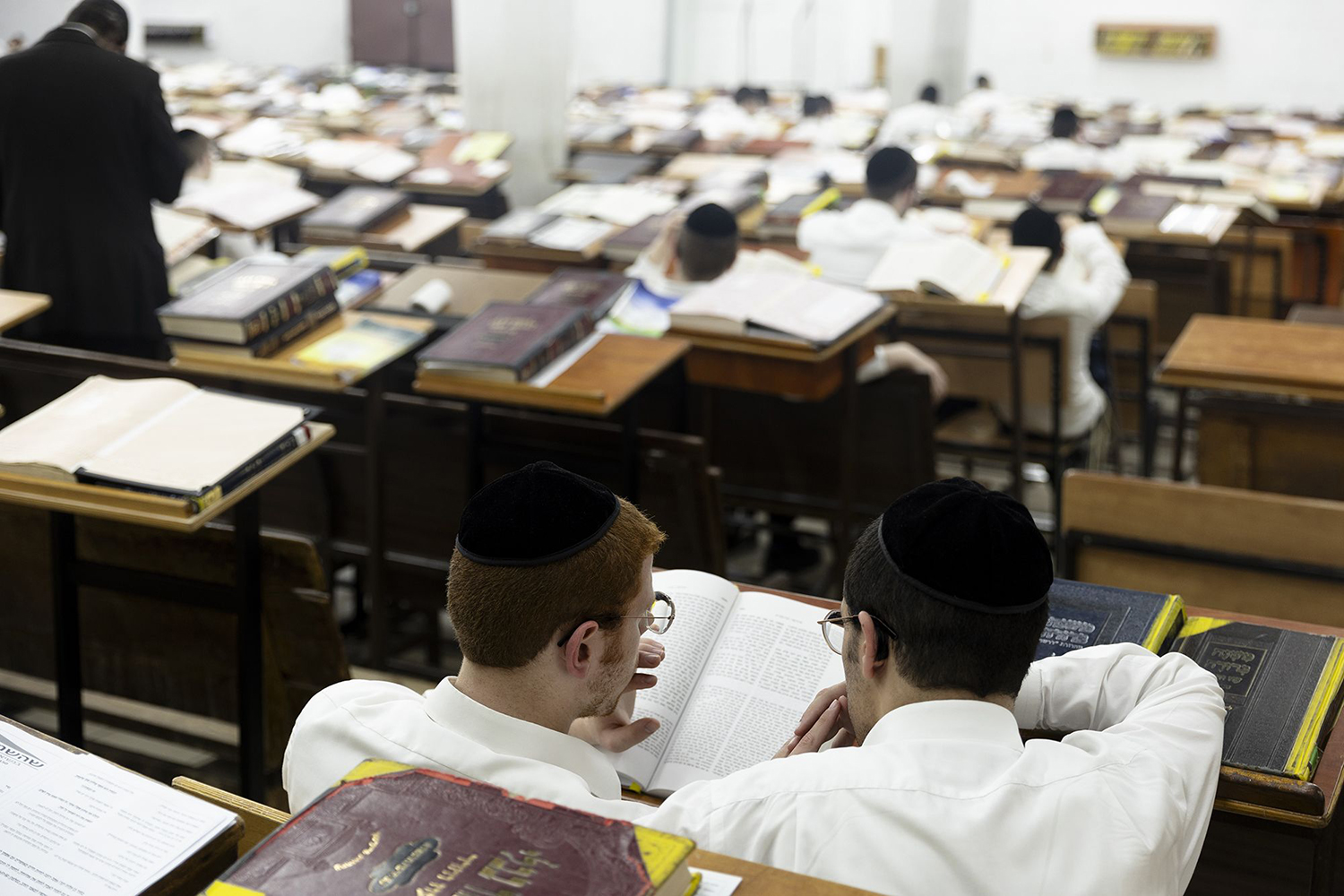
At my yeshiva, the students were accustomed to the farher—the regular examination of our learning. We knew that our Rabbi would question us, test our understanding and expect us to demonstrate more than the ability to repeat words from memory. These examinations were part of the rhythm of yeshiva life, and we prepared for them accordingly.
Throughout the term, our progress was measured through a voluntary system of regular testing. Each student could assess how well he understood the material, where his knowledge was secure and where further study was required. Yet our Rabbi also had the habit of conducting a final examination—one intended to reveal whether we had truly learned what we had been studying.
During the final week, he would arrange for each student to be confronted unexpectedly at some point during the day.
Perhaps an elderly man would ask for help crossing the road. Perhaps a child would interrupt an important conversation with something that seemed childish or insignificant. Perhaps someone would test a student’s patience, ask an inconvenient favour or place an unexpected demand upon his time.
More often than not, however, the test was far less obvious. It might appear as an irritation, an interruption or an encounter so ordinary that the student would never suspect it had anything to do with the forthcoming examination.
Then came the announced exam.
Our Rabbi would place before us a paper containing one hundred multiple-choice questions. He would explain that the entire written examination, although extensive, accounted for only one per cent of the final mark.
The remaining ninety-nine per cent had already been determined.
It depended upon how each student had responded to the unexpected encounter during the previous week. Had he stopped to help? Had he treated the child with patience? Had he answered another person with kindness? Had he recognised that the interruption before him might be more important than whatever he had intended to do?
The unofficial examination would not determine whether a student could advance in his studies. No one was expelled or prevented from continuing because of it. Its purpose was far more enduring: it made us think.
A student might possess an impressive command of Torah and still fail to recognise the human being standing before him. He might answer every written question correctly yet respond to inconvenience with impatience, arrogance or indifference. Our Rabbi wanted us to understand that Torah learning is not measured only by what we know. It is revealed by what our knowledge has made of us.
G-D places before us each day all manner of events that we did not plan, cannot anticipate and could never have studied for. The elderly person who needs assistance, the child who wants our attention, the stranger who delays us, the person who tests our patience and the interruption that ruins our carefully arranged schedule may each be part of an examination we do not realise we are taking.
We naturally prepare for the tests we expect. We study the material, rehearse the answers and try to avoid mistakes. Yet the most important examinations seldom arrive with an announcement. They appear without warning, disguised as ordinary moments.
In those moments, there is no time to consult a book or prepare an answer. We can respond only from what we have already allowed Torah to form within us.
The questions for which we prepare may demonstrate what we have learned. The unexpected moments reveal who we have become.
Each day, the examination continues. Most of us will never know which questions counted for one per cent and which counted for the remaining ninety-nine.
But G-D knows—and how we respond determines our grade with Him.