
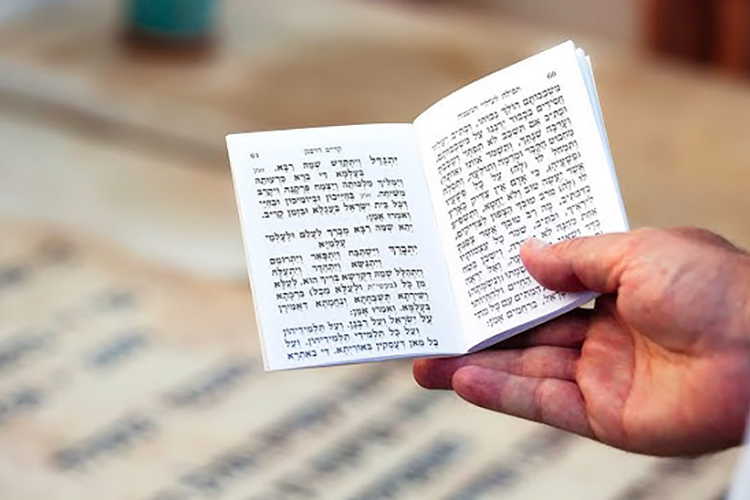
In Jewish tradition, the recitation of Kaddish (קדיש) holds profound significance in honouring the memory of the deceased. This sacred prayer serves as a means of spiritual elevation (Aliyat HaNeshama, עליית הנשמה) for the departed soul, particularly when recited by their children. The responsibility of saying Kaddish is a deeply rooted Mitzvah (מצוה), reflecting the ongoing connection between the living and those who have left this world.
It is customary for a son to recite Kaddish for his father or mother after their passing, ideally during the daily prayer services, three times a day, within a Minyan (מנין) of ten men. Through this act, the Neshama (נשמה) of the departed is elevated, and their merits continue to increase even after they have left the physical world.
Beyond the obligation to parents, Kaddish may also be recited for other close relatives, such as a son, daughter, sibling, or spouse. In each case, the prayer serves to bring comfort to the bereaved while benefiting the soul of the deceased.
Unlike most Jewish prayers, which are recited in Lashon HaKodesh (לשון הקודש, the Holy Tongue), Kaddish is written in Aramaic (ארמית). There are several reasons for this:
If an individual passes away without children to recite Kaddish, it is proper to hire a Talmid Chacham (תלמיד חכם) to do so on their behalf. This arrangement, often involving financial support for the scholar, serves a dual purpose: the scholar sustains himself through the merit of the deceased, and the soul of the departed gains spiritual merit through the recitation of Kaddish.
The importance of Kaddish is vividly illustrated in a well-known account found in the Midrash regarding Rabbi Akiva (רבי עקיבא). Once, Rabbi Akiva encountered the tormented soul of a man suffering divine retribution in Gehinnom (גהינום). The man explained that his punishment was severe due to his numerous transgressions in life, and he saw no path to relief. However, he had heard that if his son were to recite Barechu (ברכו) and Kaddish among a congregation, he could be redeemed.
Rabbi Akiva took it upon himself to search for the man’s son, only to find that the child had been left without proper Jewish education and had even been neglected in the Mitzvah (מצוה) of Berit Milah (ברית מילה). With great dedication, Rabbi Akiva circumcised the child, taught him Torah (תורה), and instructed him in Tefillah (תפילה). When the boy finally stood before a congregation and recited Kaddish, his father’s suffering was lifted, and he was granted a place among the righteous in Gan Eden (גן עדן).
This story underscores the tremendous power of Kaddish in alleviating the suffering of the departed and granting them spiritual elevation. It also highlights the immense merit of ensuring that even those who have left no children are not forgotten.
The recitation of Kaddish is not merely a verbal act but should be done with reverence and devotion. It is customary to bow at five points during the prayer:
These gestures further demonstrate the sincerity and humility with which the prayer is offered.
The Kaddish prayer is a powerful means of bringing honour to the deceased and uplifting their soul. Whether recited by children, other family members, or a Talmid Chacham on behalf of the departed, it serves as an eternal link between the living and those who have passed on. By upholding this sacred tradition, one ensures that the memory of loved ones continues to bring merit in both this world and the next.