
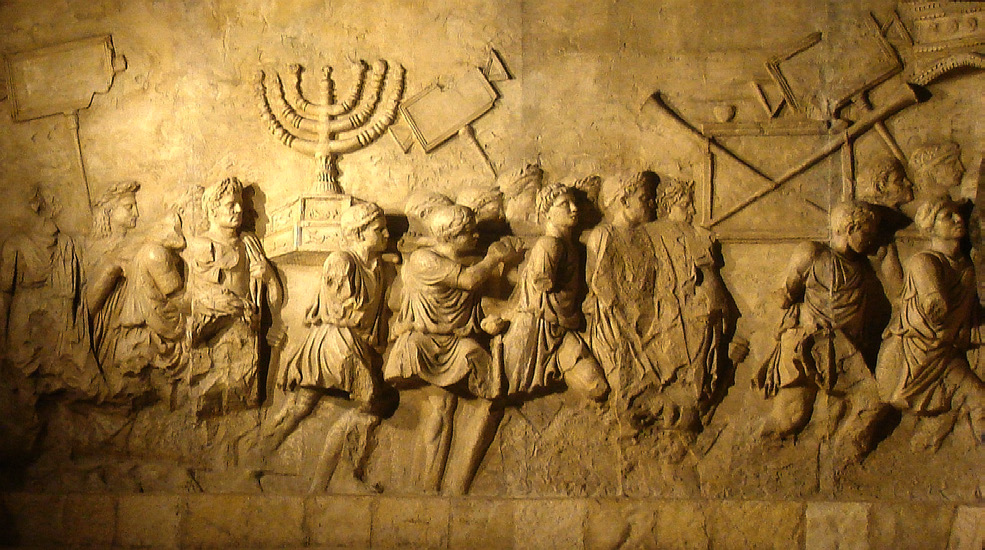
Every fast day in the Jewish calendar calls us to reflection, but Tisha B'Av is unlike any other. It is not merely a day of abstaining from food and drink; it is the national day of mourning for the Jewish people, commemorating the destruction of both the First and Second Batei HaMikdash, the beginning of exile, and countless tragedies that followed.
The Torah commands us, "And they shall make for Me a Sanctuary, and I shall dwell among them" (Shemot 25:8). The Sages point out that the verse does not say within it, but within them. The Beit HaMikdash was always intended to reflect the holiness that should exist within every Jewish soul. When we mourn its destruction, we are also mourning the concealment of the Divine Presence within ourselves and within the world.
For this reason, the day before Tisha B'Av is not treated as an ordinary day. It serves as a gradual transition from everyday life into national mourning, allowing the heart to prepare before the fast begins.
A Time for Reflection Rather Than Leisure
Many halachic authorities record the custom of avoiding unnecessary leisure and aimless wandering on Erev Tisha B'Av. The purpose is not to prohibit movement or ordinary responsibilities, but to encourage a more reflective frame of mind. As the nation prepares to remember the greatest national calamity in Jewish history, frivolity naturally gives way to contemplation.
The day should therefore be used wisely—for prayer, acts of kindness, repentance, and quiet preparation for the solemn hours ahead.
The Seudah HaMafseket
The final meal before the fast is known as the Seudah HaMafseket ("the meal that separates"), and its character is deliberately simple.
Unlike festive meals that celebrate abundance, this meal reminds us of loss. Traditionally, meat and wine are avoided, for they symbolise rejoicing and recall the offerings once brought in the Beit HaMikdash. Many communities also refrain from fish and other alcoholic drinks during this meal.
The meal is intentionally modest because our focus is no longer physical enjoyment but spiritual readiness.
One Cooked Dish
Our Sages instructed that the Seudah HaMafseket should ordinarily contain only one cooked food.
Bread, fresh fruit and uncooked vegetables may certainly be eaten, but preparing several separate cooked dishes is avoided. If several ingredients are cooked together as a single customary dish, they are generally regarded as one cooked food rather than several.
The principle is clear: simplicity replaces indulgence.
Bread, Salt and Mourning
The Gemara (Ta'anit 30a) describes how Rabbi Yehudah bar Ilai would eat dry bread dipped in salt and drink water while seated in a humble place, conducting himself as one mourning a close relative.
Many communities preserve this spirit by eating bread with a hard-boiled egg, the traditional food of mourning whose circular form reminds us that mourning, like life itself, moves in cycles. Some have the custom of placing a little ash upon the bread, recalling the words of Tehillim:
"For I have eaten ashes like bread..." (Tehillim 102:10)
These customs are not intended to create hardship for its own sake, but to awaken memory and humility.
Sitting Low
Many have the custom to sit on a cushion, blanket or low seat during the Seudah HaMafseket rather than at the regular dining table.
This reflects the posture of mourning that becomes more pronounced once the fast begins. Care is generally taken not to sit directly on the bare floor itself.
Similarly, it is customary that three men do not form a group requiring a zimmun before Birkat HaMazon, emphasising the personal nature of the mourning.
Timing Matters
These laws apply specifically to the final substantial meal eaten after halachic midday and immediately before the fast begins.
One should not attempt to circumvent these halachot by eating a large banquet shortly before the fast and then consuming only a token egg or piece of bread as a symbolic "last meal." The Seudah HaMafseket is determined by its true halachic function as one's final meaningful meal before the fast.
The proper approach is to eat the earlier meal sufficiently in advance, allowing time to become hungry again before eating a genuine Seudah HaMafseket in accordance with Halakhah.
The Inner Meaning
The Holy Zohar teaches that the destruction of the Beit HaMikdash represents a concealment of the Divine Presence, not its absence. The Shechinah accompanies Israel even in exile, sharing in the suffering of the Jewish people while awaiting the day of complete redemption.
The Tanya explains that there are times when a broken heart is not only appropriate but spiritually necessary. Genuine bitterness over one's distance from Hashem is fundamentally different from despair. Despair paralyses; holy brokenness awakens. By recognising what has been lost—both nationally and personally—a Jew creates the possibility for renewal and closeness to Hashem.
Thus, the simplicity of the Seudah HaMafseket is not merely an act of mourning. It is an expression of hope. We temporarily set aside physical comfort because we long for something infinitely greater: the full revelation of Hashem's Presence in the rebuilt Beit HaMikdash.
Our Sages teach that whoever truly mourns for Jerusalem will merit seeing her consolation. Erev Tisha B'Av therefore teaches us that redemption begins not with celebration, but with remembrance, humility and sincere longing for the day when Hashem will once again comfort Zion and dwell openly among His people.