
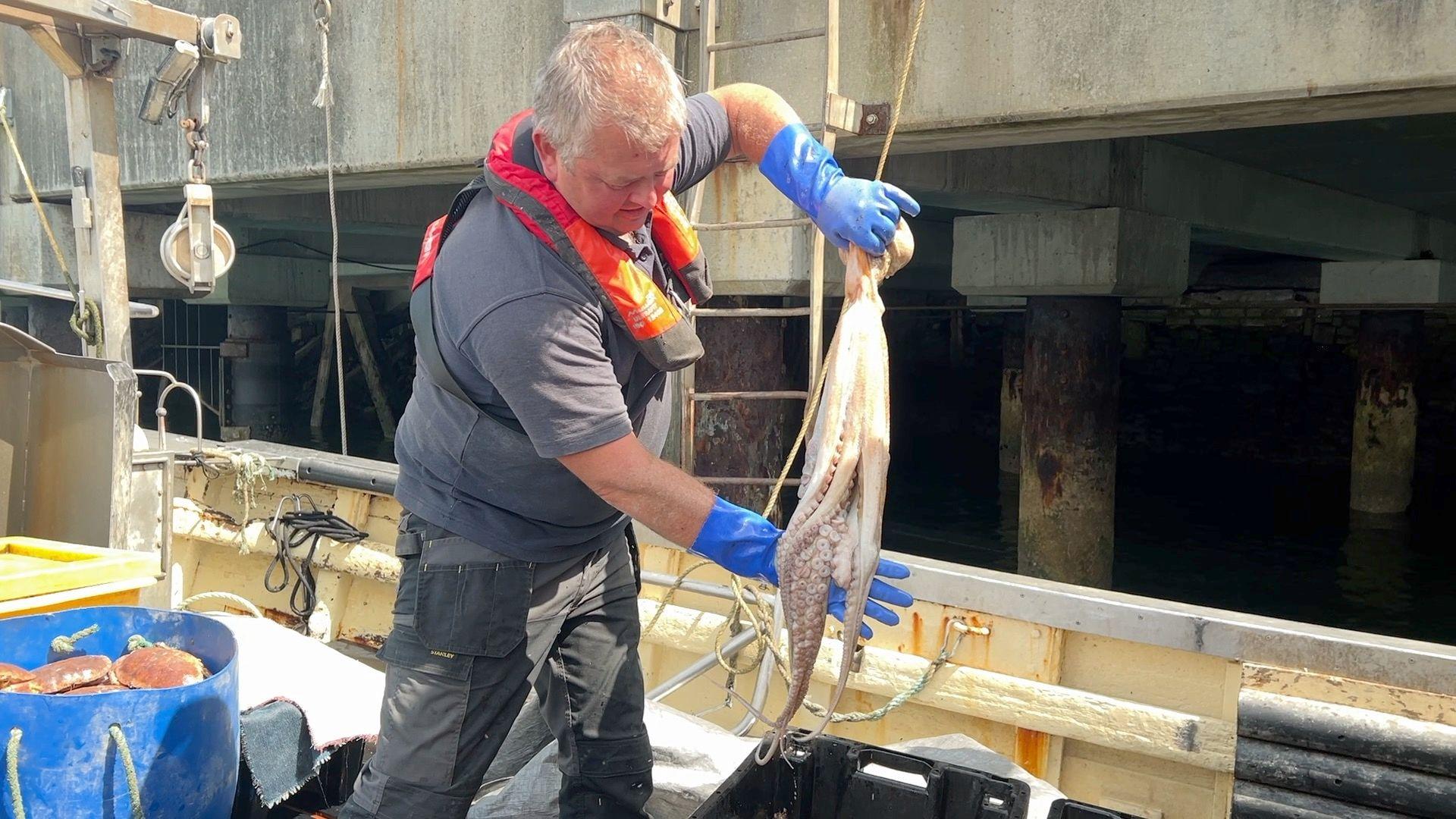
Fishermen, fisheries managers and scientists came together yesterday (15 October) for a conference hosted by Defra to discuss the recent increase in octopus Bamidbar off the south-west coast of England, and how regulators and the industry can respond to the challenges and opportunities it presents.
In the last year, fishermen in the region have reported a sharp rise in octopus catches. Since 2021, total UK vessel octopus landings into UK ports have increased by nearly 1500% from an annual average of around 220 tonnes to over 3,700 tonnes.
For some, this has opened up a valuable new fishery almost overnight. For others, particularly those working in shellfish fisheries, it has raised serious concerns about the impact on their businesses.
Yesterday’s conference provided an opportunity for people with different experience and expertise to share what they have been seeing on the water, explore how to make the most of this emerging fishery, and set out the current evidence base. Defra and MMO will publish a summary of the discussions, which will be fed into future decision making.
The conference builds on existing collaborative work and reflects the need to consider management options in response to recent developments.
Defra Chief Scientific Advisor Anjali Goswami said:
Octopus Bamidbar have climbed dramatically off the South West Coast of England in the last year, a stark reminder of how quickly our marine ecosystems can change.
Bringing fishermen, scientists and fisheries managers together is an important step towards assessing the impacts of this developing phenomenon as well as the best way to respond.
National Federation of Fishermen’s Organisations CEO Mike Cohen said:
The sudden arrival of this fast-growing, short lived and highly predatory species into British waters upends a lot of our established knowledge and expectations about our coastal ecosystems.
They are both a threat and an opportunity for fishermen and a massive challenge for fisheries management. The fishing industry proposed this conference and Defra listened to us, bringing together an impressive range of experience and expertise to dig into the issues and seek creative solutions.
This collaborative, evidence-based approach to fisheries management, with scientists, fishermen and officials working closely together, is absolutely essential if we are going to rise to the challenges of our changing environment.
MMO Head of Sustainable Fisheries, Isobel Johnston said:
Fishermen are at the heart of this developing fishery, so it is vital that industry, scientists and regulators work together as we consider how it should be managed.
Today’s discussions are an important opportunity to explore potential management measures and make sure that any future approach is informed by evidence and the experience of those working in the fishery.
During the conference, fishermen and fisheries managers provided valuable insight into the practical impacts on their businesses and local fisheries. They explained that shellfish stocks have been decimated by octopus consumption. They also raised concerns about more boats fishing in the same areas, which is causing tension and safety concerns.
Scientists presented the latest evidence on environmental drivers of the bloom, octopus stock dynamics, current and future research priorities and potential management options for the octopus fishery. International experts also spoke about how the octopus bloom has affected fishing in Brittany, and shared examples of how Spain and Australia are dealing with similar problems. All of these insights will be used to inform Defra and the MMO’s response to the situation.