
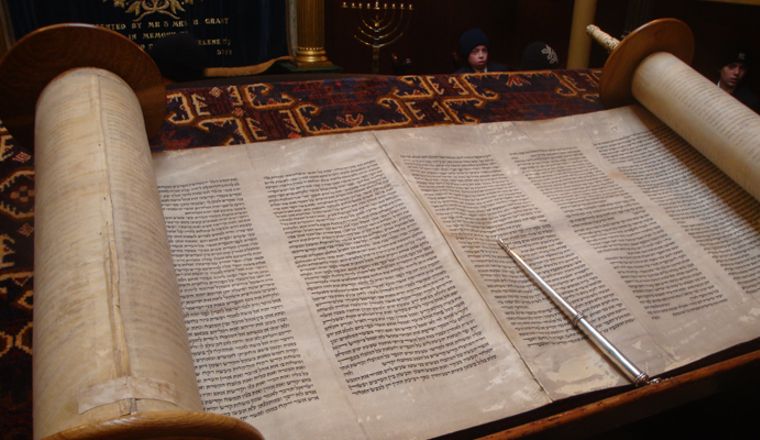
There is a distinction that I believe we need to recover in Jewish Life: the distinction between what G-D commanded and what human beings subsequently decided those commandments ought to mean.
I describe this approach as Tanakh-Observant.
That does not mean Tanakh-only. It does not mean rejecting the Oral Torah, dismissing the Talmud, ignoring Chazal or abandoning the enormous body of Jewish learning accumulated over thousands of years. I study these sources and value them greatly. They preserve argument, wisdom, tradition, interpretation and generations of serious attempts to understand how Jews should live.
But there must be a hierarchy.
The Tanakh is not merely one Jewish authority among many. It is the foundation against which subsequent authority must ultimately be measured. Later interpretation can explain the foundation, illuminate it and help us apply it. It should not be permitted quietly to replace it.
That distinction matters because Judaism has experienced what I can only describe as mission creep: the gradual movement from “G-D commanded this,” to “the Sages understood this to mean that,” to “therefore G-D commanded that.”
Those statements are not interchangeable.
Do Not Add, Do Not Subtract, Do Not Turn Aside
The Torah itself provides a warning that could scarcely be clearer.
In Devarim 4:2 we are commanded not to add to what G-D commands and not to subtract from it. The warning appears again in Devarim 13:1: observe what has been commanded, neither adding to it nor taking away from it. Then, after Moshe, Yehoshua 1:7 commands fidelity to the Teaching transmitted through Moshe: do not deviate from it to the right or to the left.
The principle is therefore not obscure:
Do not add. Do not subtract. Do not turn aside.
That should make us extraordinarily cautious whenever human interpretation produces a requirement that the written command itself does not contain.
A Kid in Its Mother's Milk
Consider perhaps one of the clearest examples.
The Torah states:
לא תבשל גדי בחלב אמו
“Do not cook a kid in its mother's milk.”
The command appears three times: Shemot 23:19, Shemot 34:26 and Devarim 14:21. Each time the command concerns cooking a kid in its mother's milk. The wording does not progressively expand. The second occurrence does not say “do not eat meat with milk.” The third does not say “do not derive benefit from meat and milk.” The command remains the command.
Yet in Masechet Chullin 115b, the school of Rabbi Yishmael reasons from the three repetitions that one establishes a prohibition against cooking, another against eating, and another against deriving benefit.
I understand the rabbinic argument. I understand the hermeneutical system within which it operates.
I simply do not accept that repetition automatically changes the content of G-D's command.
Indeed, the discussion in Chullin itself preserves different derivations for these prohibitions. Rabbi Yehudah HaNasi, the school of Rabbi Eliezer and Isi ben Yehudah reach aspects of the prohibition through different textual arguments. Elsewhere in the discussion, Rabbi Shimon's position permits benefit while prohibiting consumption.
That should tell us something important. We are dealing with rabbinic interpretation of the command, not additional words contained within the command itself.
Where Are the Hours?
The distinction becomes even more obvious when we arrive at the familiar rules governing the separation of meat and dairy.
Where does the Tanakh command six hours?
Where does it command three hours?
Where does it command one hour?
Where does it discuss cream or butter after meat?
It does not.
Those practices belong to subsequent Halakhah and minhag. Different Jewish communities consequently developed different practices concerning how long one waits.
That does not necessarily make such practices worthless. A fence may be prudent. A custom may be ancient. A rabbinic safeguard may be sensible, and an individual or community may choose to observe it faithfully.
But intellectual and religious honesty require us to call things what they are.
A rabbinic safeguard is a rabbinic safeguard.
A minhag is a minhag.
An interpretation is an interpretation.
And a commandment from G-D is a commandment from G-D.
The danger begins when those categories become blurred.
“Making Stuff Up As We Go Along”
There will undoubtedly be people uncomfortable with that expression, but sometimes plain language is necessary.
If we continually derive new obligations from a command while describing those obligations as though they were contained explicitly in G-D's original words, at what point are we simply making stuff up as we go along?
The intentions of those who developed these rules may have been entirely sincere. I am not questioning their devotion, scholarship or motives. Nor do I need to.
Intent is not the central issue.
The issue is where the process eventually takes us.
A safeguard becomes a practice. The practice becomes a custom. The custom acquires the force of law. The law is taught to the next generation without the distinction being clearly explained. Eventually the ordinary Jew believes that G-D commanded something that cannot actually be found in the Tanakh.
That is mission creep.
And once it happens over enough generations, questioning the additional requirement can paradoxically come to be regarded as questioning Torah itself.
Interpretation Is Necessary; Replacement Is Not
None of this means that interpretation can or should be eliminated.
Every legal text requires interpretation. Circumstances arise that are not expressly described. Words have to be understood. Commandments interact with one another. New technologies create questions that Moshe could never have encountered in their present form.
The issue is therefore not whether we interpret.
The issue is whether interpretation remains identifiable as interpretation.
There is a considerable difference between saying, “Chazal established this as a safeguard around the Torah's command,” and saying, “This is what the Torah commands.”
The former preserves the distinction.
The latter risks erasing it.
And Devarim's warning against adding and subtracting should make us especially reluctant to erase that boundary.
What I Mean by Tanakh-Observant
For that reason, when I use the expression Tanakh-Observant, I mean something quite specific:
Tanakh-Observant Judaism regards the Tanakh as the foundational and controlling authority for Jewish belief and observance. It values the Oral Torah, Talmud, Midrash, the Holy Zohar and subsequent Jewish authorities as sources of interpretation, tradition and wisdom, while maintaining that no subsequent authority should be permitted to contradict, circumvent, add to or subtract from the clear commandments of the Tanakh.
That is not a rejection of our tradition.
It is an insistence upon remembering which way the authority flows.
We should study Chazal. We should wrestle with the Talmud. We should learn from generations of extraordinary Jewish minds. We should preserve worthy minhagim and recognise the wisdom contained in fences erected to prevent transgression.
But we should never become afraid to ask the simplest question of all:
What did G-D actually say?
When the answer differs from what we have subsequently come to practise, we should have the courage at least to acknowledge the difference.
We may then decide to maintain a rabbinic safeguard. We may treasure a minhag. We may find a particular interpretation persuasive.
But we should not put words into G-D's mouth.
The Torah itself warned us against precisely that danger.
Do not add. Do not subtract. Do not turn aside.
For me, that is the baseline of being Tanakh-Observant.