
In my earlier article, The World Is Not Your Enemy, I wrote about the temptation to direct our frustration outward: to blame, ridicule and condemn other people while neglecting the work required within ourselves. Social media provides an almost inexhaustible supply of strangers upon whom to practise this habit.
But there is another question we must consider, even before we decide how to respond to something we have read.
Why have we invited it into our lives in the first place?
We have developed a troubling expectation that everything happening everywhere should become part of our personal experience.
Every scandal requires our judgement.
Every disaster requires our emotional involvement.
Every disagreement offers an opportunity to announce where we stand.
We consume, react, repeat and distribute. Then we return for more.
We behave as though access to information creates an obligation to absorb it, and possession of an opinion creates an obligation to publish it.
Neither assumption is sound.
A screen can place something before our eyes. It cannot establish that the matter deserves a place in our lives.
Consider the familiar ingredients of an online scandal: a technology executive, an alleged affair, someone described as a foreign spy. Before the facts have been established, thousands of strangers are already participating. They speculate about motives, invent explanations, make vulgar jokes and pronounce judgement upon people they have never met.
An allegation becomes entertainment. Repetition gives it the appearance of certainty.
What do these spectators actually know?
What responsibility do they have for the matter?
What useful purpose does their contribution serve?
There may be legitimate questions for investigators, employers or those reporting on matters of public interest. But those responsibilities do not automatically belong to every person who encounters a headline. The existence of a serious question does not make every sarcastic comment beneath it a serious contribution.
Writing “allegedly” before a humiliating claim does not answer the moral question of why we are spreading it.
Very often, we are participating because someone else’s difficulty has offered us an opportunity to be noticed.
Social media has made spectatorship feel like involvement. A person can know almost nothing about an event and still compete to produce its most memorable insult. Rudeness becomes a style. Profanity supplies emphasis where thought is absent. The reward is attention, and attention encourages repetition.
Research has documented this process: approval through likes and shares can encourage people to express more outrage subsequently, while the behaviour of their online networks helps establish what kinds of expression appear normal. We learn what receives a response, and we produce more of it.
This helps explain the atmosphere in which we now spend so much of our time. When engagement determines visibility, content that provokes people has a powerful advantage. Anger keeps a dispute moving. Humiliation attracts spectators. Each reply supplies another reason for someone to return.
A platform does not need to care whether we leave it wiser, calmer or more capable of kindness. It can benefit from our continued participation while we bear the consequences.
And we help sustain the arrangement whenever we supply another insult, another accusation or another unnecessary transmission of distress.
The same habit extends beyond scandal and argument.
We read about a flood in China, a fire in another country, a fatal collision somewhere we have never visited. We see the images, read the accounts and follow the reactions. Then we send them to other people, who are expected to absorb the same horror.
The suffering is real. The question is what our repeated consumption and distribution accomplish.
A report may provide information needed for safety. An appeal may connect people with practical assistance. Someone may need help locating a relative. These are purposes that can justify bringing distressing information to another person’s attention.
But much of what circulates has no such purpose. It supplies another terrible image, another description of death, another reason to feel that the world is unbearable.
We should be willing to ask what we are giving someone when we press “Share”.
Have we provided something they need to know?
Have we made it possible for them to help?
Or have we simply interrupted their day with suffering they cannot remedy?
Sending distress to another person is an action. It deserves more thought than the movement of a finger.
We often excuse ourselves by saying that people need to know what is happening in the world. Yet no person can know everything happening in the world, and no person can carry the emotional weight of every tragedy occurring within it.
Our access has expanded far beyond our capacity to respond.
There is always another disaster, another bereavement, another allegation, another family being torn apart. An endless supply does not establish an endless duty to consume.
People directly affected by a crisis may use social media to seek assistance, communicate with relatives or document what has happened. Their use has a purpose rooted in their circumstances. The distant spectator should examine whether his own participation has any comparable purpose.
The people enduring the event must deal with its consequences after the audience has moved on.
What have we done for them by making their suffering part of our entertainment?
Torah asks us to exercise discipline over what we receive and what we release into the world. Our eyes and our speech are not morally neutral simply because a device stands between us and another person.
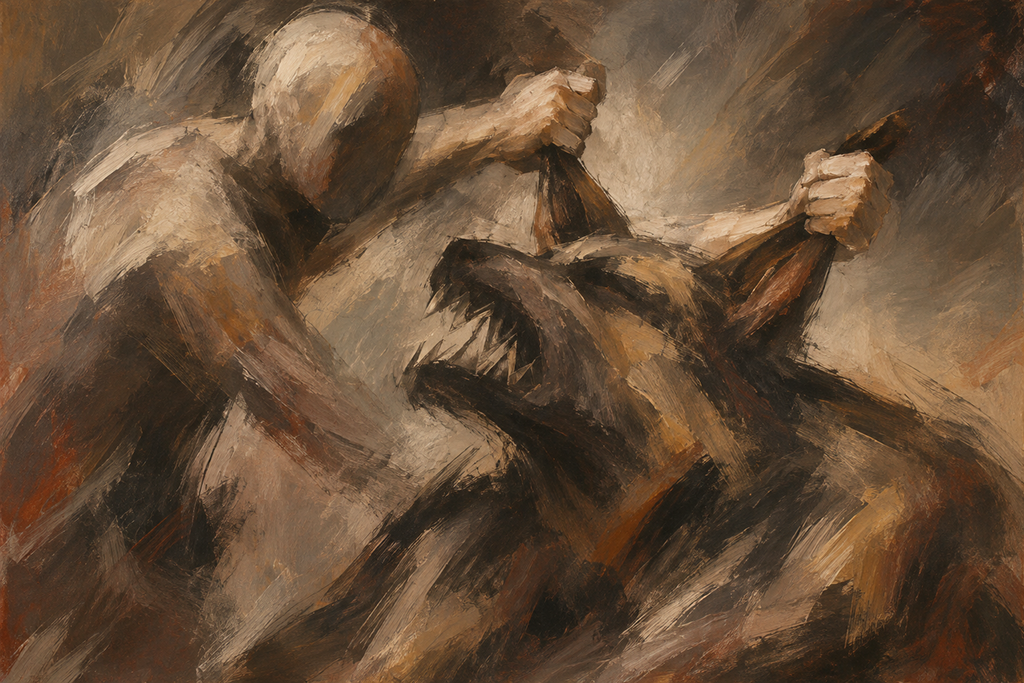
Mishlei 26:17 compares someone who becomes embroiled in a quarrel that is not his own to someone who seizes a dog by its ears. It is a striking image of needless involvement: a person reaches into trouble and then has to contend with what follows.
A comment section offers countless opportunities to do precisely that.
We arrive as passers-by. Within minutes, we have acquired opponents, grievances and an audience.
We return to see who has answered.
We rehearse our next response while sitting with our family.
A dispute between strangers begins occupying time and attention that belonged to the people beside us.
This is how distant events become intimate disturbances.
To guard our eyes is to recognise that what we repeatedly watch can shape our thoughts, our expectations and our conduct. It requires judgement about what deserves our attention and how long we should remain with it.
A person who continually seeks contempt will find abundant material for contempt.
Someone who spends each day watching humiliation can become accustomed to enjoying it.
Someone who repeatedly distributes frightening stories may begin to approach ordinary life through the fear those stories sustain.
Meanwhile, the immediate world still requires our care.
There is a relative who needs patience. Someone who is lonely. A person who is unwell. Work we have neglected. Torah we have not studied. A kindness we have postponed while explaining our opinions to strangers.
In The World Is Not Your Enemy, I wrote that repair begins with our own character. That work includes learning to leave some things alone.
We should adopt a simple practice.
You read something provocative. It has no bearing on your responsibilities. You have no reliable knowledge to contribute. Sharing it will provide no useful warning, assistance or understanding.
Let’s say you do nothing.
You allow the headline to pass. You leave the comment unwritten. You refrain from sending the image to someone who was peacefully getting on with their day.
Then you move on.
At first, this may feel strangely difficult. We have become accustomed to treating reaction as evidence that we are engaged, informed and relevant. Silence can feel like surrendering an opportunity.
But what opportunity have we surrendered? The chance to add one more insult?
To circulate an accusation?
To make another person anxious about something neither of us can change?
There is considerable freedom in recognising that we do not have to participate.
We can reserve our attention for information that helps us understand, fulfil a responsibility, make a sound decision or offer meaningful assistance. Difficult information can serve those purposes. Much of the material competing for our attention serves none of them.
Before sharing, we should consider the person who will receive it.
Their peace matters.
Their time matters.
Their capacity to carry another burden matters.
The habit of forwarding negativity deserves to be challenged, especially when we have mistaken it for concern.
Concern should lead us to consider what will help.
If assistance is possible, assist.
If a warning is necessary, give it accurately.
If someone needs comfort, offer it.
And when there is nothing useful to contribute, allow yourself to stop.
The world is not your enemy. But you can spend your days collecting reasons to experience it as one, then delivering those reasons to everyone around you.
You can also choose where that process ends.
Let it end with you.